English
  English
 русский
 日本語
日本語 Español
 中文简体
中文简体
A constant wattage heating cable is an electric heat tracing system that delivers a fixed, predetermined power output per unit length regardless of the ambient temperature — unlike self-regulating cables, which vary their output in response to temperature changes. This fixed-output characteristic makes constant wattage cables the preferred choice for high-temperature process maintenance, long pipeline runs, hazardous area freeze protection, and applications where precise, consistent heat delivery is a process requirement. This article explains how constant wattage heating cables work, where they outperform alternatives, and how to select and install them correctly.
Content
- Why Constant Wattage Heating Cables Are a Critical Industrial Component
- How Does a Constant Wattage Heating Cable Work?
- Constant Wattage vs Self-Regulating Heating Cable: What Are the Key Differences?
- Which Applications Require Constant Wattage Heating Cables?
- How to Select the Right Constant Wattage Heating Cable for Your Application
- How to Calculate the Required Watt Density for a Constant Wattage Heating Cable
- What Are the Key Installation Requirements for Constant Wattage Heating Cables?
- Frequently Asked Questions About Constant Wattage Heating Cables
- Q: Can constant wattage heating cable be cut to length on site?
- Q: Does a constant wattage heating cable need a thermostat?
- Q: What is the maximum temperature that constant wattage heating cable can withstand?
- Q: What causes constant wattage heating cable failure?
- Q: How long does a constant wattage heating cable last?
- Q: Can constant wattage heating cable be used under concrete floors?
- Summary: When to Specify Constant Wattage Heating Cable
Why Constant Wattage Heating Cables Are a Critical Industrial Component
Constant wattage heating cables form the backbone of industrial heat tracing systems where process temperature requirements exceed the output capability or reliability threshold of self-regulating alternatives. In oil and gas pipelines, chemical processing plants, power generation facilities, and food manufacturing environments, maintaining precise fluid or surface temperatures is not optional — it directly affects product quality, process safety, and regulatory compliance.
The global industrial heat tracing market was valued at approximately USD 2.8 billion in 2023 and is projected to reach USD 4.6 billion by 2031 at a CAGR of 6.4%. Constant wattage heating cables represent a significant share of this market, particularly in the oil and gas sector — which accounts for over 35% of total heat tracing demand — where long pipeline runs, high process temperatures, and hazardous area classification make constant wattage the only technically viable solution.
Freeze protection of water pipes, roof and gutter de-icing, and floor warming represent additional volume segments. In all these contexts, understanding the specific technical characteristics of constant wattage heating cable is essential before specification or procurement.
How Does a Constant Wattage Heating Cable Work?
A constant wattage heating cable generates heat through resistive heating — an electrical current passes through a resistance wire or alloy element, and by Ohm's law (P = I²R), a fixed power output is produced independent of the surrounding temperature. The resistance of the heating element does not change meaningfully with temperature (unlike the semiconductive polymer core in self-regulating cables), so the power output remains essentially constant across the entire operating temperature range of the cable.
There are two primary construction architectures for constant wattage heating cables:
Series Constant Wattage Heating Cables
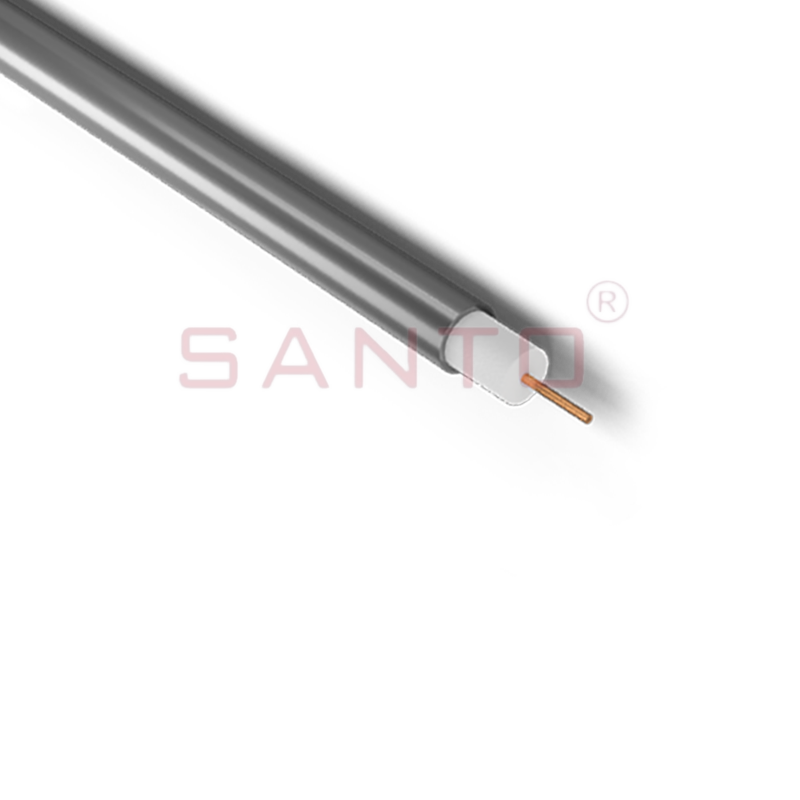
Series constant wattage cables consist of a single continuous resistance wire running the full length of the circuit — the entire cable forms one uninterrupted resistive element, and the total circuit power is determined by the wire's total resistance and the applied voltage. This design is the simplest and lowest-cost construction but has critical limitations: the cable cannot be cut to length in the field, and a fault anywhere in the series circuit causes the entire circuit to fail. Each circuit requires its own power connection at one end.
- Typical watt density: 5–40 W/m depending on wire resistance and supply voltage
- Maximum circuit length: Determined by total resistance — typically 100–600 m per circuit at standard voltages
- Field cut-to-length: Not possible — must be factory-made to specified circuit length
- Applications: Roof and gutter de-icing, floor heating, simple freeze protection on short pipe runs
Parallel Constant Wattage Heating Cables
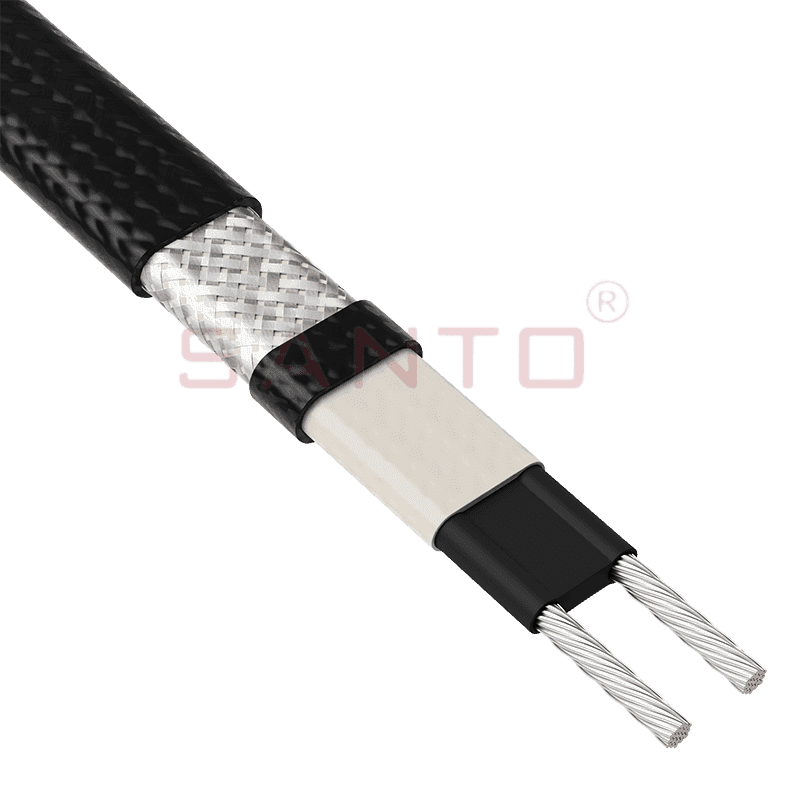
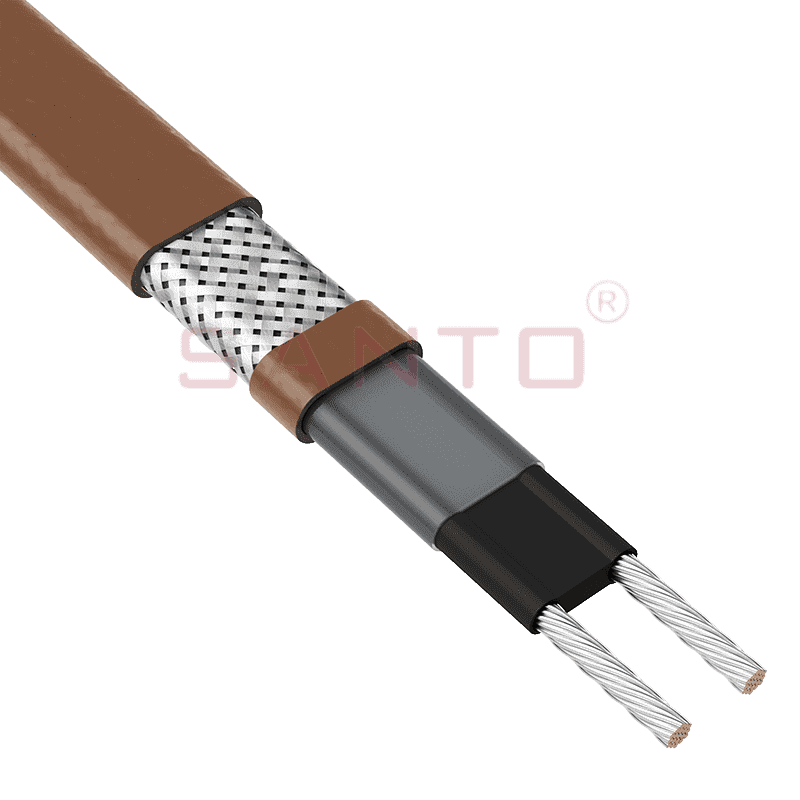
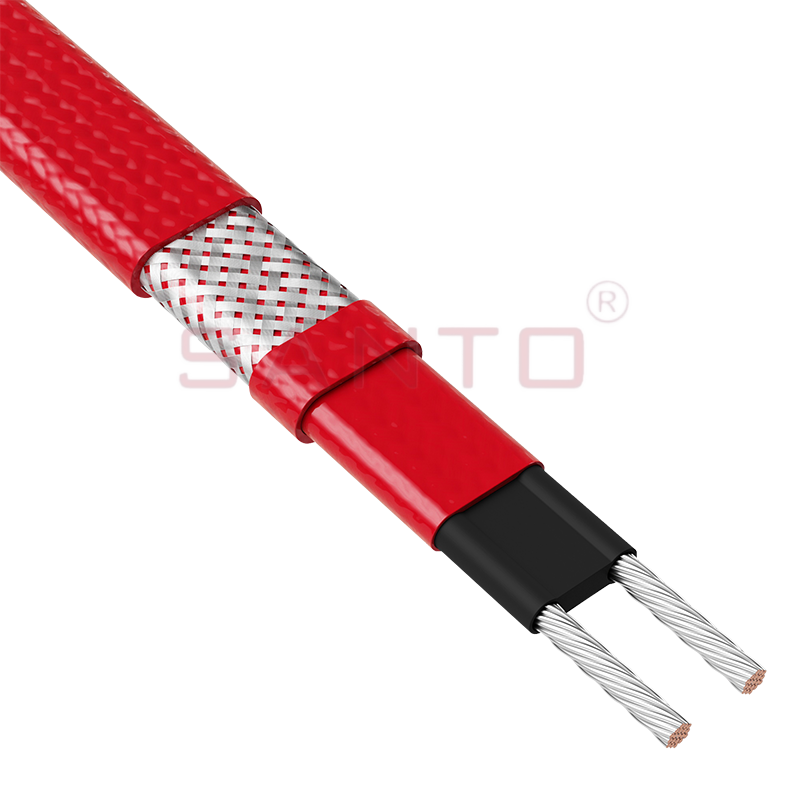
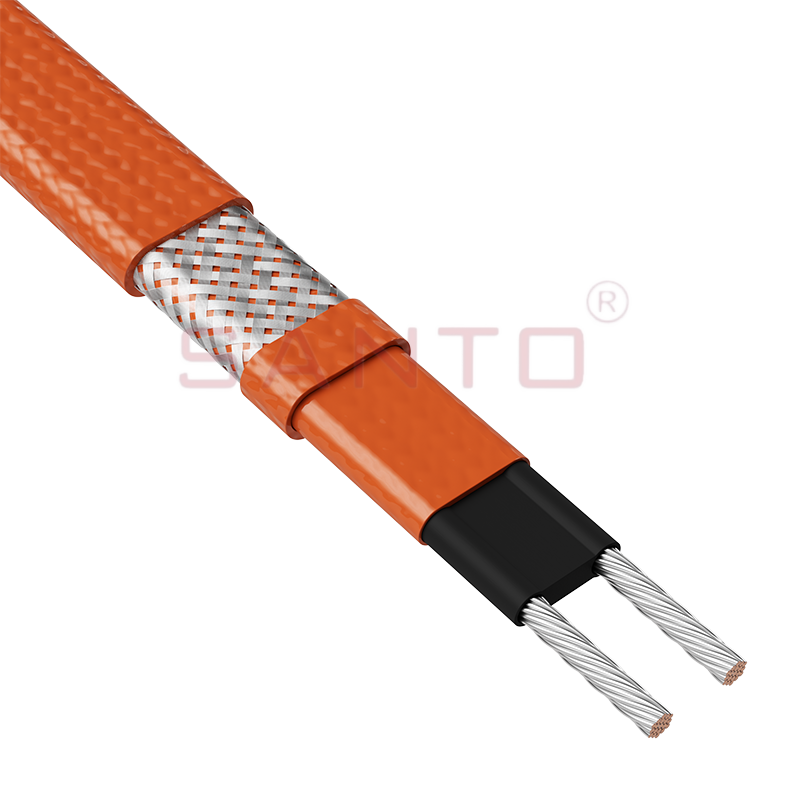
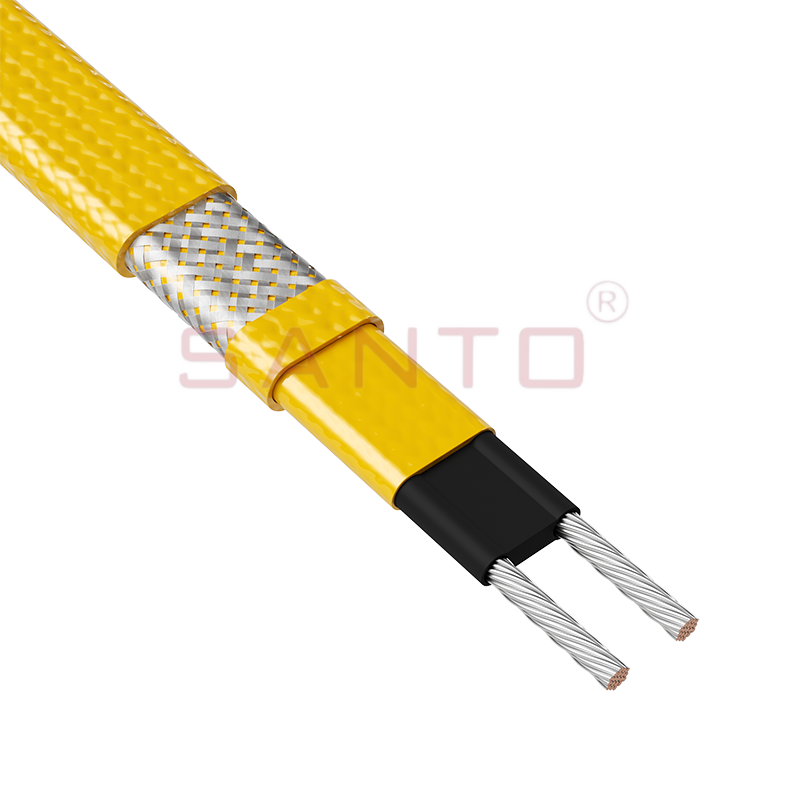
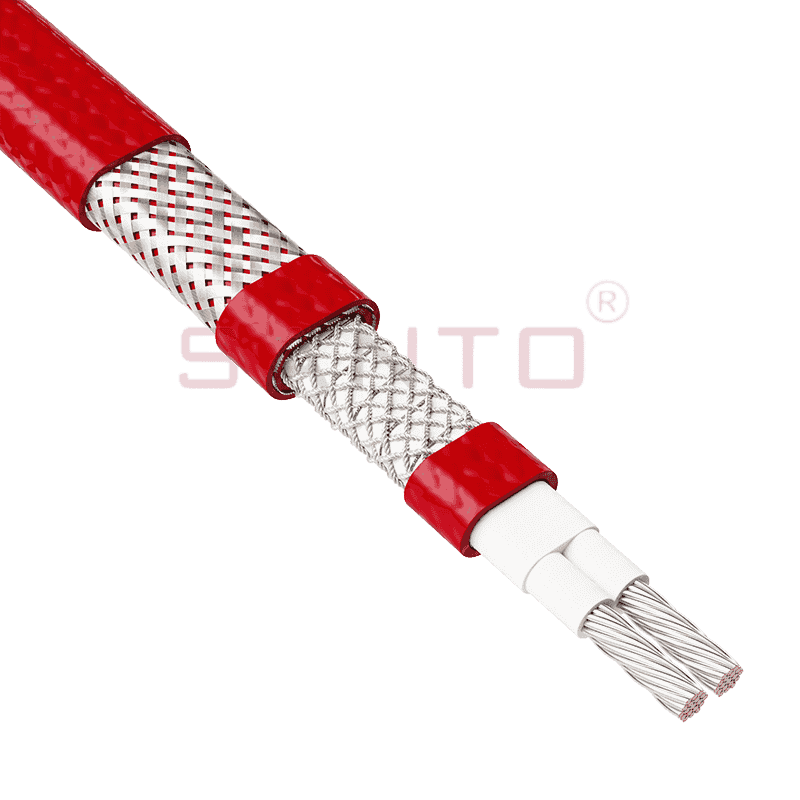
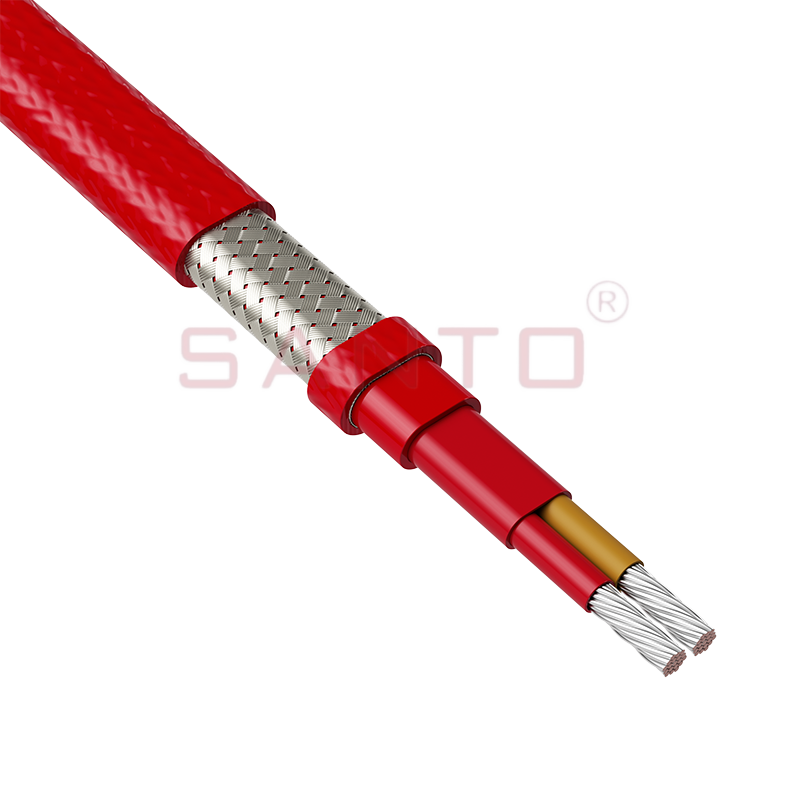
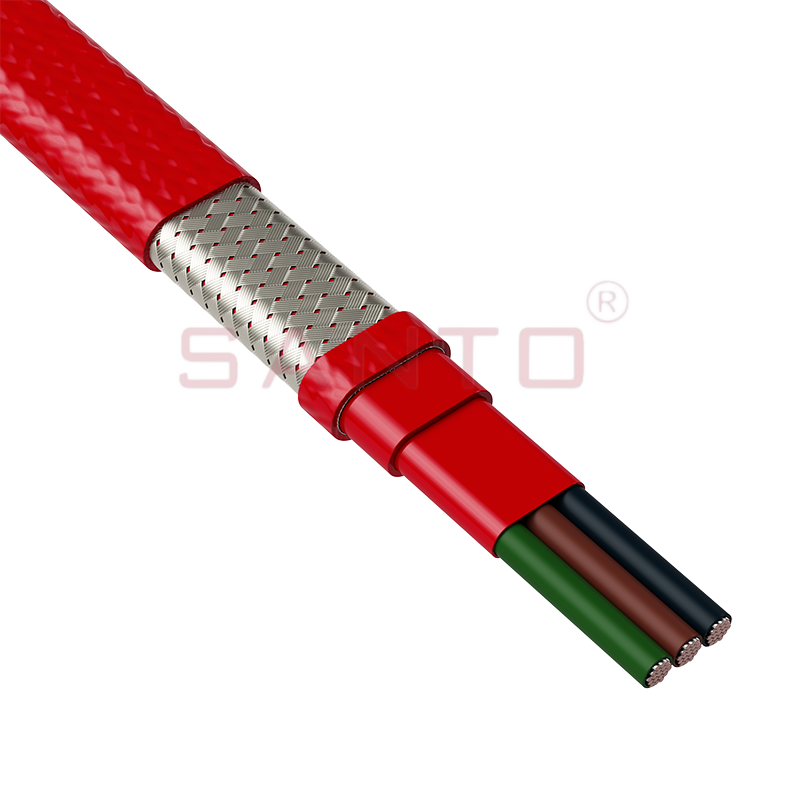
Parallel constant wattage cables use two bus wires running the full cable length, with resistance heating elements connected across the bus wires at regular intervals — typically every 30–60 cm — creating a parallel circuit architecture where each heating zone operates independently of others. This design allows the cable to be cut to any length in the field (to the nearest heating zone interval), dramatically simplifies installation, and means a fault in one zone does not affect adjacent zones.
- Typical watt density: 10–60 W/m at standard voltages; up to 95 W/m in high-wattage industrial versions
- Maximum circuit length: 50–300 m per circuit depending on bus wire resistance and power supply capacity
- Field cut-to-length: Yes — to the nearest heating zone pitch
- Applications: Industrial pipeline freeze protection and process temperature maintenance, vessel heating, instrumentation protection
Mineral-Insulated (MI) Constant Wattage Heating Cables
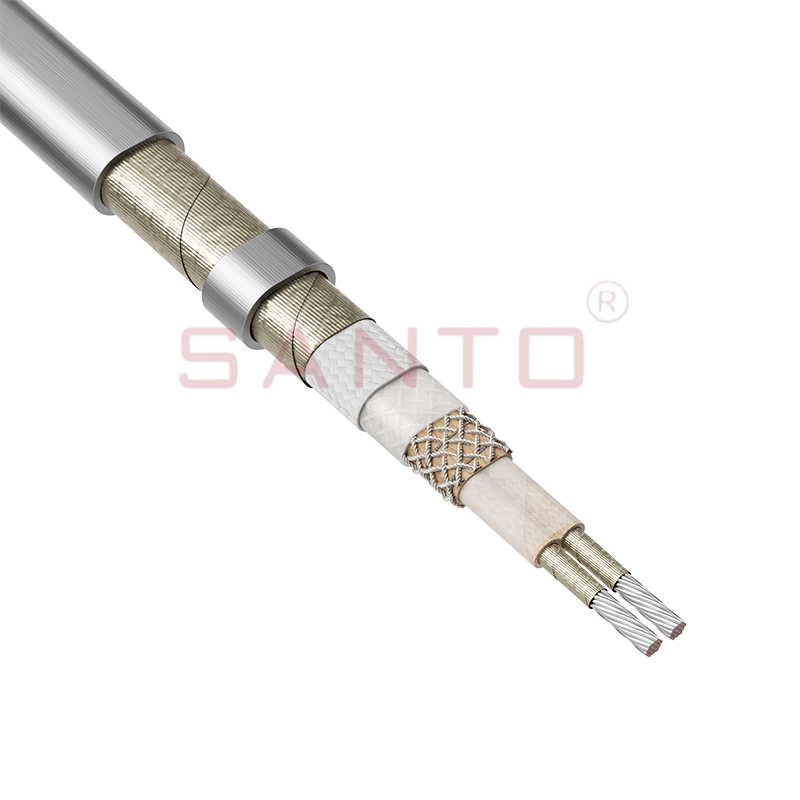
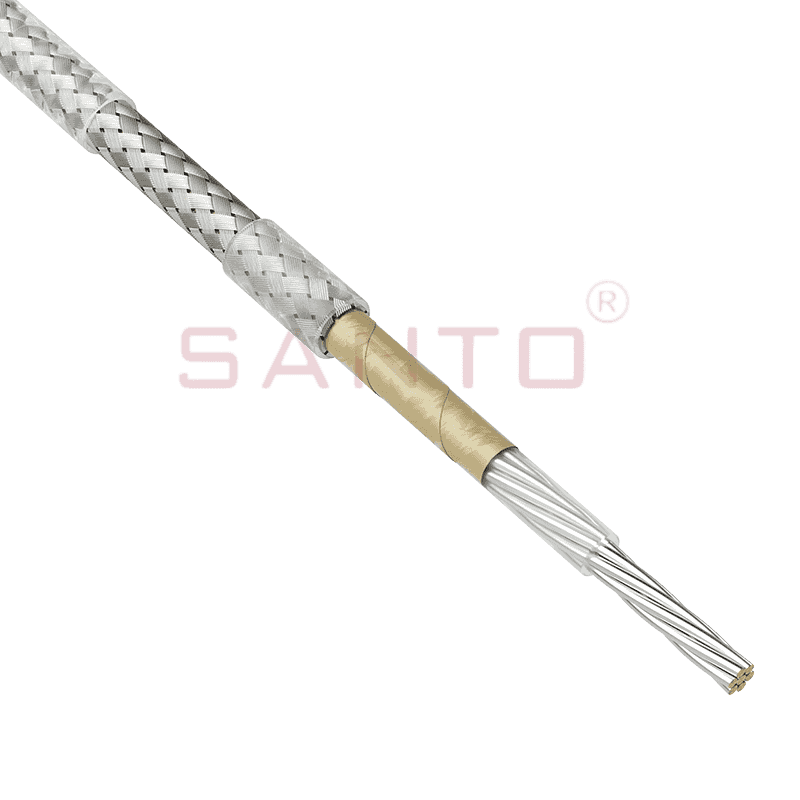
Mineral-insulated constant wattage cables represent the highest-performance category, using a compacted magnesium oxide (MgO) insulation surrounding one or two resistance alloy conductors inside a metallic sheath — enabling operating temperatures up to 650°C and watt densities up to 250 W/m. MI cables are specified for high-temperature industrial processes, electric heat tracing on steam lines, high-temperature vessel heating, and any application where polymer-insulated cables would fail from thermal degradation.
- Maximum exposure temperature: 400–650°C depending on sheath alloy
- Watt density: 30–250 W/m
- Construction: Nickel, stainless steel, or Inconel sheath; NiCr or NiFe resistance alloy conductor; MgO insulation
- Applications: High-temperature process pipes (above 200°C), steam tracing, kiln and furnace ancillary heating, power generation equipment
- Limitation: Higher cost; requires specialized termination; not field-cuttable without re-termination
Constant Wattage vs Self-Regulating Heating Cable: What Are the Key Differences?
The fundamental difference between constant wattage and self-regulating heating cables is how their output responds to temperature — and this single characteristic drives most of the application, safety, and cost differences between the two technologies.
| Attribute | Constant Wattage Cable | Self-Regulating Cable |
| Output vs temperature | Fixed output at all temperatures | Output decreases as temperature rises |
| Maximum pipe temperature | Up to 650°C (MI type) | Typically 65–200°C maximum |
| Overheat risk if overlapped | Yes — serious burn/fire risk | Minimal — output self-limits |
| Maximum circuit length | Up to 600 m (series); 300 m (parallel) | Typically 100–150 m maximum |
| Energy efficiency (warm conditions) | Lower — full output regardless of need | Higher — reduces output when warm |
| Field cut-to-length | Parallel type: yes; Series type: no | Yes — any length |
| Watt density range | 5–250 W/m | 8–95 W/m |
| Thermostat / control required | Strongly recommended (mandatory for many applications) | Optional for freeze protection |
| Suitable for hazardous areas | Yes — with appropriate certification | Yes — with appropriate certification |
| Installed cost | Medium–High (requires more controls) | Low–Medium (simpler installation) |
Table 1: Comprehensive comparison of constant wattage heating cable versus self-regulating heating cable across key technical, safety, and economic attributes.
Which Applications Require Constant Wattage Heating Cables?
Constant wattage heating cables are the mandatory or strongly preferred solution in four categories of application where self-regulating cables are technically inadequate.
High-Temperature Process Maintenance
Any pipeline or vessel requiring a maintained process temperature above 120°C demands constant wattage heating cable because self-regulating cables reach their performance ceiling at approximately 65–200°C depending on grade. Examples include sulfur pipelines maintained at 130–150°C, bitumen and heavy crude oil pipelines at 60–120°C, chemical process lines carrying viscous or solidifying products, and steam condensate return lines. In oil and gas applications, a single 200 mm diameter crude oil pipeline traced with 40 W/m constant wattage cable may require 8–12 kW of installed heating capacity per 100 m of pipe — a load that must remain constant regardless of ambient conditions to ensure product flowability.
Long Pipeline Runs
For pipeline heat tracing circuits exceeding 100–150 m in length, constant wattage parallel cables are the practical standard because self-regulating cables experience excessive voltage drop and power loss at longer circuit lengths. Offshore platforms, cross-site transfer lines in chemical plants, and firewater main freeze protection systems in large industrial facilities routinely involve individual circuit runs of 200–400 m — only achievable with parallel constant wattage cable at the correct watt density and voltage specification.
Roof, Gutter, and Drainage De-Icing
Series constant wattage cables are the established technology for roof edge de-icing, gutter heating, and downpipe freeze protection in residential and commercial buildings, where a predetermined heat output per meter is needed to reliably melt snow and ice accumulation. A typical residential gutter de-icing installation uses 30–40 W/m series constant wattage cable at 230V, consuming approximately 300–400 W for a 10 m gutter run. When controlled by a thermostat set to activate at 2–3°C, annual energy consumption is limited to periods of actual freeze risk — typically 300–600 hours per year in temperate climates.
Hazardous Area and Intrinsically Safe Applications
In ATEX Zone 1 and Zone 2, NEC Class I Division 1 and Division 2, and IECEx-classified hazardous areas, constant wattage heating cables with appropriate certification provide a predictable, verifiable maximum surface temperature — a critical safety parameter for ignition source assessment. Because constant wattage output is fixed, the maximum cable surface temperature can be precisely calculated from the thermal resistance of the insulation and pipe wall, allowing the installer to certify that the cable surface will never exceed the ignition temperature of the surrounding atmosphere. This predictability is more straightforward to certify than self-regulating cables, whose output depends on the thermal environment.
How to Select the Right Constant Wattage Heating Cable for Your Application
Correct specification of a constant wattage heating cable requires matching five parameters: required watt density, maximum exposure temperature, circuit length, supply voltage, and area classification. The table below summarizes the selection criteria for the most common application categories.
| Application | Cable Type | Watt Density | Max Exposure Temp | Typical Voltage | Control Required |
| Gutter / roof de-icing | Series CW | 20–40 W/m | 65°C | 230V AC | Ambient thermostat |
| Domestic pipe freeze protection | Series or Parallel CW | 10–20 W/m | 65°C | 230V AC | Pipe thermostat |
| Industrial freeze protection (long runs) | Parallel CW | 20–40 W/m | 100°C | 230V or 400V | RTD control panel |
| Process temperature maintenance (medium temp) | Parallel CW | 30–60 W/m | 200°C | 230V or 400V | RTD / PLC control |
| High-temperature process (above 200°C) | MI Constant Wattage | 40–250 W/m | 650°C | 230V or 400V | PLC / DCS control |
| Hazardous area (ATEX Zone 1/2) | Parallel CW (Ex-certified) | 20–60 W/m | 200°C | 230V or 400V | Certified Ex thermostat / control |
Table 2: Application-by-application specification guide for constant wattage heating cable selection by cable type, watt density, temperature rating, and control method.
How to Calculate the Required Watt Density for a Constant Wattage Heating Cable
The required watt density (W/m) for a constant wattage heating cable is determined by the heat loss calculation for the pipe or surface being traced, accounting for pipe diameter, insulation thickness, target maintenance temperature, and minimum ambient temperature.
The simplified heat loss formula for a pipe is:
Q (W/m) = (Tm - Ta) / (Rins + Rpipe)
Where Tm is the minimum maintenance temperature (°C), Ta is the minimum ambient temperature (°C), Rins is the thermal resistance of the pipe insulation (°C·m/W), and Rpipe is the pipe wall thermal resistance (typically negligible for steel).
As a practical example: a 50 mm nominal bore steel pipe carrying water at a minimum maintenance temperature of 5°C, located outdoors in an environment where ambient temperature reaches -20°C, insulated with 50 mm of mineral wool:
- Temperature differential (Tm - Ta) = 5 - (-20) = 25°C
- Thermal resistance of 50 mm mineral wool on a 50 mm pipe: approximately 1.8 m·°C/W
- Calculated heat loss: 25 / 1.8 = 13.9 W/m
- Add 25% design margin: required watt density = 17.4 W/m → specify a 20 W/m constant wattage cable
For complex geometries — valves, flanges, instrumentation — heat loss is significantly higher per unit length due to increased surface area and thermal bridging. Standard engineering practice applies multiplication factors: valve bodies typically require 3–6 times the linear pipe heat loss equivalent, and flanges require 1.5–2 times the pipe factor. This additional heat load must be accommodated by overlapping cable or applying higher-wattage sections at these fittings.
What Are the Key Installation Requirements for Constant Wattage Heating Cables?
Correct installation of constant wattage heating cable is critical to both performance and safety — unlike self-regulating cable, overlapping constant wattage cable creates a localized hot spot that can cause the cable jacket to melt, damage the pipe coating, or in extreme cases start a fire.
- No overlapping: Constant wattage cables must never be crossed over themselves or other heating cables. When tracing around valves or bends, the cable must be routed in a smooth S-curve or looped around the fitting without direct cable-on-cable contact.
- Spiral vs straight lay: For higher heat requirements, constant wattage cable can be applied in a spiral wrap pattern (increasing effective W/m on the pipe surface) rather than a straight lay. Common spiral pitches achieve 1.5×, 2×, or 3× the linear cable W/m rating on the pipe surface. Calculate the total cable length required accordingly.
- Thermal insulation application: Apply pipe insulation over the heating cable as quickly as possible after installation. Energizing constant wattage cable without insulation — even briefly during commissioning testing — can overheat the cable jacket against an uninsulated pipe surface.
- End termination: Seal all cable end terminations with manufacturer-supplied end sealing kits rated for the application temperature and IP environment. Moisture ingress at an unsealed end cap is the most common cause of constant wattage cable installation failures.
- Ground fault protection: All constant wattage heating cable circuits must be protected by a ground fault circuit interrupter (GFCI/RCD) rated at 30 mA or lower. This is mandatory in most national electrical codes and is essential because water ingress into a damaged cable creates a potentially lethal shock and fire hazard.
- Insulation resistance test: Before energizing, measure insulation resistance between the heating conductor and the metallic braid/shield using a 500V or 1,000V Megger. A healthy cable reads above 20 MΩ; values below 1 MΩ indicate moisture contamination or damage requiring investigation before the circuit is energized.
Frequently Asked Questions About Constant Wattage Heating Cables
Q: Can constant wattage heating cable be cut to length on site?
Parallel constant wattage cables can be cut to length in the field to the nearest heating zone pitch (typically every 30–60 cm), but series constant wattage cables cannot be modified after manufacture without completely recalculating and rewinding the resistance element. When ordering series constant wattage cable, the exact circuit length must be specified to the manufacturer — there is no tolerance for field adjustment. Parallel cables offer the practical flexibility needed for most industrial installation projects, which is a primary reason they dominate the industrial heat tracing market over series designs.
Q: Does a constant wattage heating cable need a thermostat?
A thermostat or temperature controller is strongly recommended for all constant wattage heating cable installations and is mandatory in many applications. Without temperature control, a constant wattage cable runs at full output continuously regardless of whether heating is needed — wasting energy and accelerating cable jacket degradation through cumulative thermal stress. In process temperature maintenance applications, a proportional RTD controller maintains the pipe at the exact target temperature, cycling the cable on and off to prevent overshoot. For simple freeze protection, a bi-metallic or electronic ambient thermostat set to activate at 2–4°C provides adequate control at minimal cost while preventing needless energy consumption during warmer periods.
Q: What is the maximum temperature that constant wattage heating cable can withstand?
The maximum withstand temperature of a constant wattage heating cable depends entirely on its construction: polymer-insulated parallel cables are typically rated to 100–200°C exposure temperature, while mineral-insulated (MI) constant wattage cables withstand up to 400–650°C continuously. It is critical to distinguish between two different temperature ratings: the maximum continuous exposure temperature (the pipe or surface temperature the cable can withstand when energized) and the maximum intermittent temperature (a higher short-term excursion rating). Always specify a cable whose maximum exposure temperature exceeds the highest possible pipe surface temperature under all operating scenarios, including process upsets and steam-out cleaning cycles.
Q: What causes constant wattage heating cable failure?
The four most common failure modes for constant wattage heating cables are mechanical damage during installation, moisture ingress at terminations, thermal degradation from exceeding the cable's temperature rating, and localized overheating from cable crossing or overlap. Mechanical damage during installation — from cable ties overtightened against a sharp pipe fitting, or from abrasion against an unprotected structural edge — is responsible for the majority of early failures in industrial installations. A robust installation inspection protocol, including insulation resistance testing before and after pipe insulation application, catches the majority of these issues before the system is commissioned. Long-term failures are most commonly caused by repeated thermal cycling near the cable's maximum temperature rating, which gradually embrittles the insulation jacket.
Q: How long does a constant wattage heating cable last?
A correctly specified, properly installed, and thermostat-controlled constant wattage heating cable can reliably last 20–30 years in service — but operating at or near the maximum rated temperature continuously will reduce service life to 5–10 years through accelerated insulation aging. Mineral-insulated cables, having no organic insulation materials, are effectively indefinite-life products in the absence of mechanical damage or corrosion, with documented installations remaining in service for over 40 years. Polymer-insulated parallel constant wattage cables in freeze protection service (low duty cycle, temperatures well below the cable's rated maximum) routinely exceed 25 years before insulation resistance degradation requires circuit replacement.
Q: Can constant wattage heating cable be used under concrete floors?
Yes — series constant wattage cables are widely used for underfloor heating in concrete screeds and for preventing ice formation on outdoor concrete surfaces such as ramps, stairs, and pedestrian walkways. For embedded concrete applications, the cable must carry a certification specifically indicating suitability for direct concrete embedding, as the alkaline environment and compressive stress of cured concrete are more aggressive than surface-mounted applications. The recommended watt density for underfloor heating is 100–200 W/m² of floor area, achieved by selecting the appropriate cable watt-per-meter rating and spacing between parallel runs. A floor sensor thermostat — rather than an air thermostat — ensures the floor surface temperature remains within the comfortable 25–29°C range for occupied spaces.
Summary: When to Specify Constant Wattage Heating Cable
Constant wattage heating cables are the correct specification whenever the application demands fixed, predictable heat output, high-temperature capability, long circuit runs, or precise process temperature maintenance that a self-regulating cable cannot reliably deliver.
- Specify series constant wattage cable for fixed-length residential and commercial applications including gutter de-icing, roof edge heating, underfloor warming, and short domestic pipe freeze protection runs.
- Specify parallel constant wattage cable for industrial freeze protection, process temperature maintenance on pipelines up to 300 m, hazardous area heat tracing, and any application requiring field-cuttable cable with reliable long-circuit performance.
- Specify mineral-insulated constant wattage cable for all applications with sustained pipe or surface temperatures above 200°C, including steam tracing, high-temperature chemical processes, and power generation ancillary heating.
- Always pair constant wattage heating cable with appropriate temperature control, ground fault protection, and an insulation resistance test protocol — these three measures together determine whether the installation delivers its designed service life of 20–30 years or fails prematurely through preventable causes.
By understanding the operating principles, performance boundaries, and installation requirements of constant wattage heating cable, engineers and installers can confidently specify the right product for each application — ensuring reliable, safe, and energy-efficient heat tracing performance across the full service life of the system.