English
 English
 русский
 日本語
 Español
 中文简体
To prevent oil pipelines from freezing in winter, keep the pipe wall above its critical minimum temperature with controlled heat input and stop heat from escaping. That means four elements working together: thermal insulation, correctly sized electric heat tracing, line temperature control, and commissioning checks before the first cold snap. For an oil line, the critical minimum is not always 0°C. It is usually set above the crude pour point, above the freezing point of any water phase, and below the maximum temperature the fluid and cable sheath can tolerate.
A common mistake is adding heat tracing to an uninsulated line and expecting a stable result. Insulation slows heat loss; heat tracing adds heat. Neither works reliably without the other.
Content
- Why Oil Pipelines Freeze Even When the Oil Itself Does Not
- The Core Fix: Insulation Plus Electric Heat Tracing
- How to Size a Winterization System Without Overheating
- Control and Monitoring: The Difference Between a Safe Line and a Frozen Line
- Installation Details That Decide Winter Performance
- Commissioning and Pre-Winter Checks
- Frequently Asked Questions
Why Oil Pipelines Freeze Even When the Oil Itself Does Not
Oil pipelines rarely freeze because the oil itself becomes solid at 0°C; they lose flow because water, wax, and gas hydrates change the fluid behavior. Free water can form ice plugs, waxy crude can gel against a cold pipe wall, and high-pressure gas with water can form hydrates at low points or across valves.
| Mechanism | What happens | Practical response |
|---|---|---|
| Water phase | Free water pockets freeze and restrict flow or form plugs. | Keep the line above 0°C and remove free water where possible. |
| Wax and paraffin | Waxy crude gels or deposits when the wall temperature drops. | Maintain a temperature above the wax appearance point with a design margin. |
| Gas hydrates | Water and gas form hydrate plugs at low temperature and high pressure. | Combine heat input with pressure and chemical management; avoid cold spots. |
| High viscosity | Heavy crude becomes too viscous to pump. | Hold a minimum wall temperature along the full line, including valves and flanges. |
| Stagnant sections | Dead legs, bypasses, and low-flow sections cool faster. | Trace them separately and use line sensing rather than ambient sensing only. |
The practical lesson is that winter protection must cover the whole line, not just the main pipe run. Valves, flanges, supports, and dead legs are heat sinks, and they are often where the first blockage starts.
The Core Fix: Insulation Plus Electric Heat Tracing
The core fix is to hold the pipe wall above the critical minimum with a controlled heat source and then keep that heat in. Heat loss depends on the temperature difference between the pipe and the environment, insulation thickness and condition, pipe diameter, wind exposure, and burial depth. A warm cable on a wet, damaged insulation jacket is an expensive way to lose energy and create hot spots.
| Type | Best fit | Control behavior | Watch-outs |
|---|---|---|---|
| Self-regulating | Branch lines, above-ground oil lines, varied ambient conditions | Output falls as the pipe warms; can be cut to length | Check maximum exposure temperature and insulation compatibility |
| Power-limiting | Medium-length lines needing steadier output | Power-limited behavior with temperature response | Confirm circuit design and controller compatibility |
| Constant wattage | Fixed maintain temperature on defined lengths | Near-constant output | Hot-spot risk if overlapped or poorly installed |
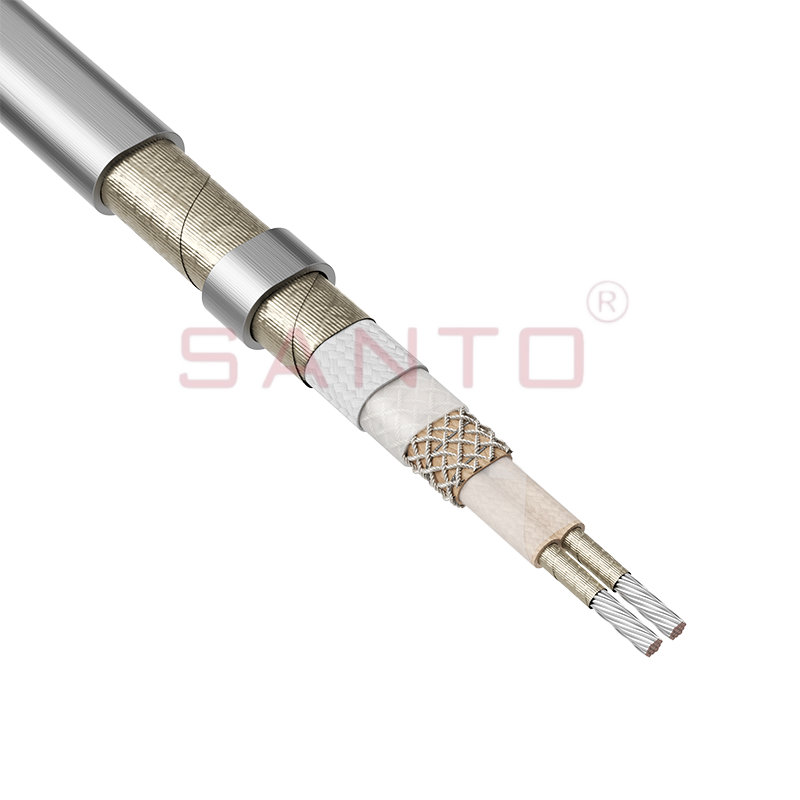
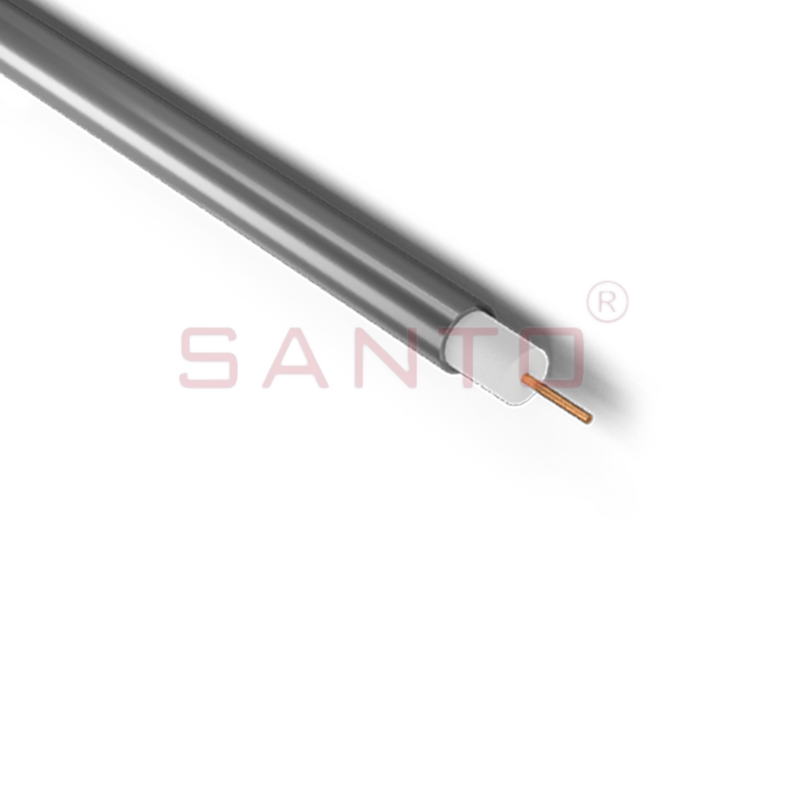
| Mineral insulated | High-temperature, high-reliability, or hazardous areas | High power density and robust construction | Field terminations must be skilled and sealed |
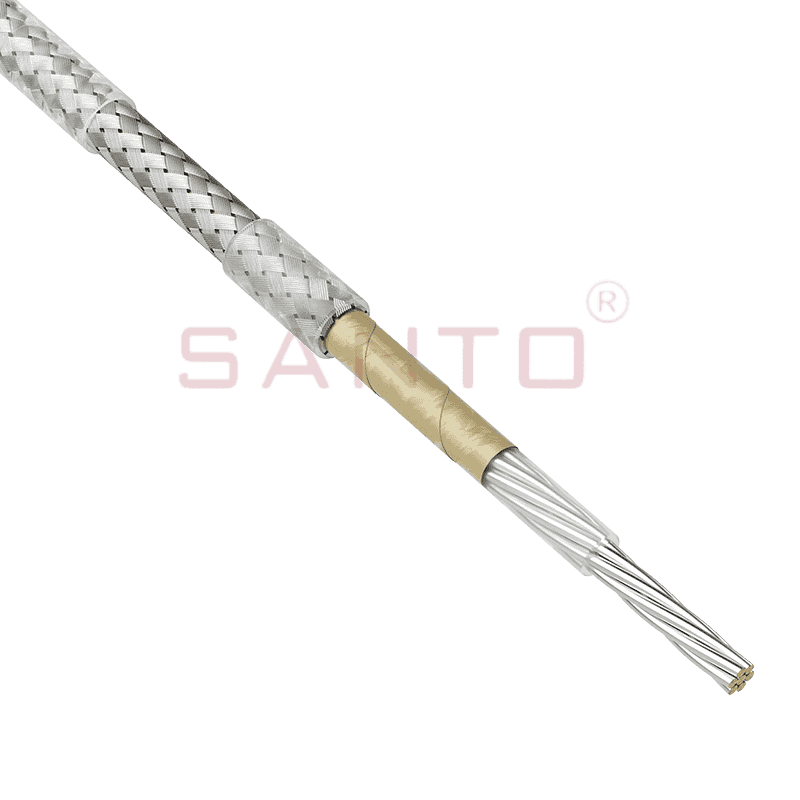
| Skin effect | Long-distance pipelines and high-temperature maintain | Effective for long circuits | Requires careful electrical design and specialist commissioning |
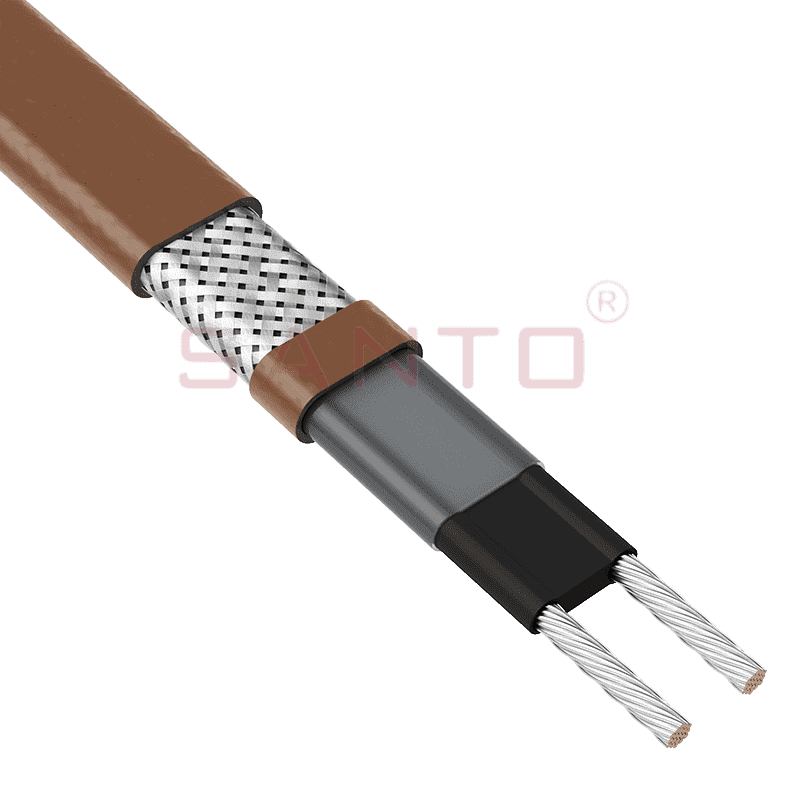
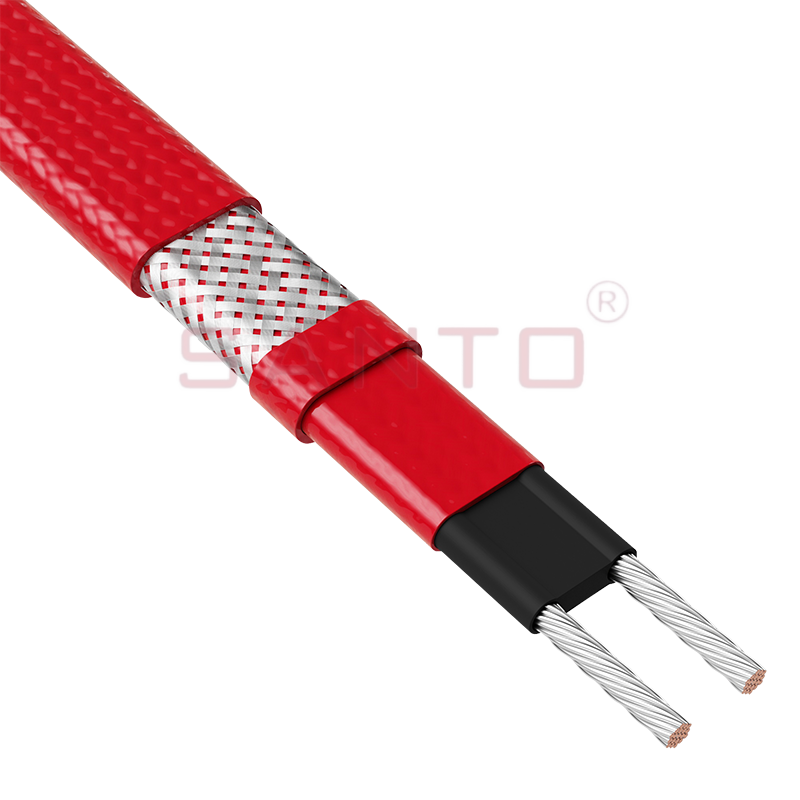
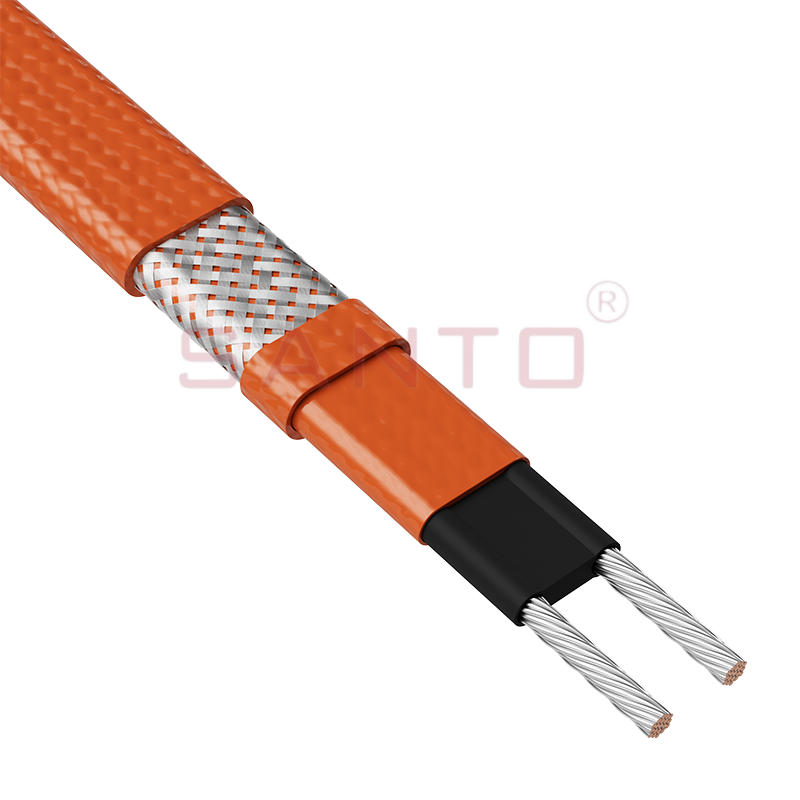
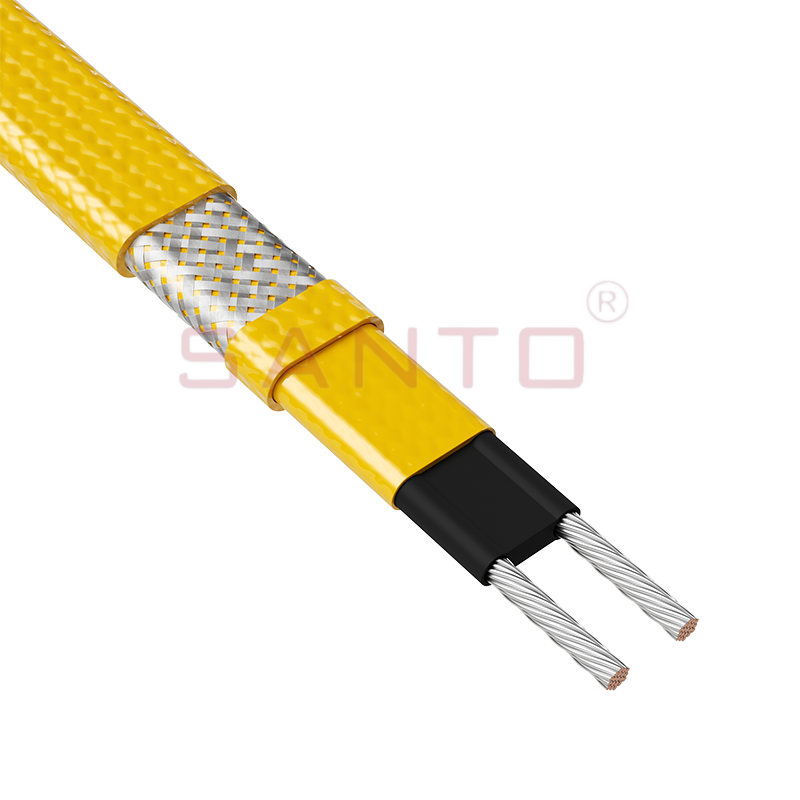
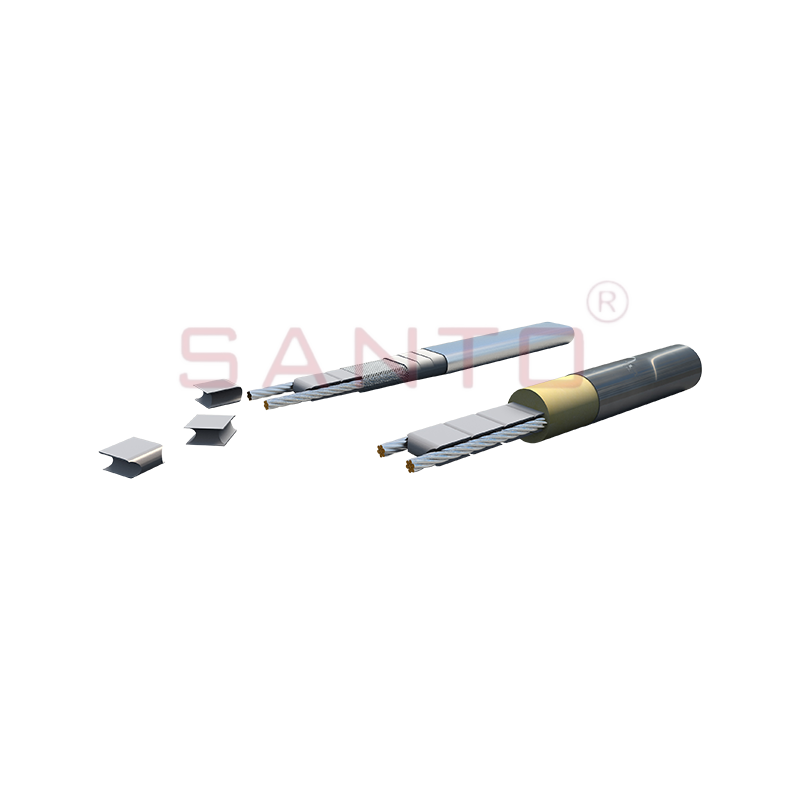
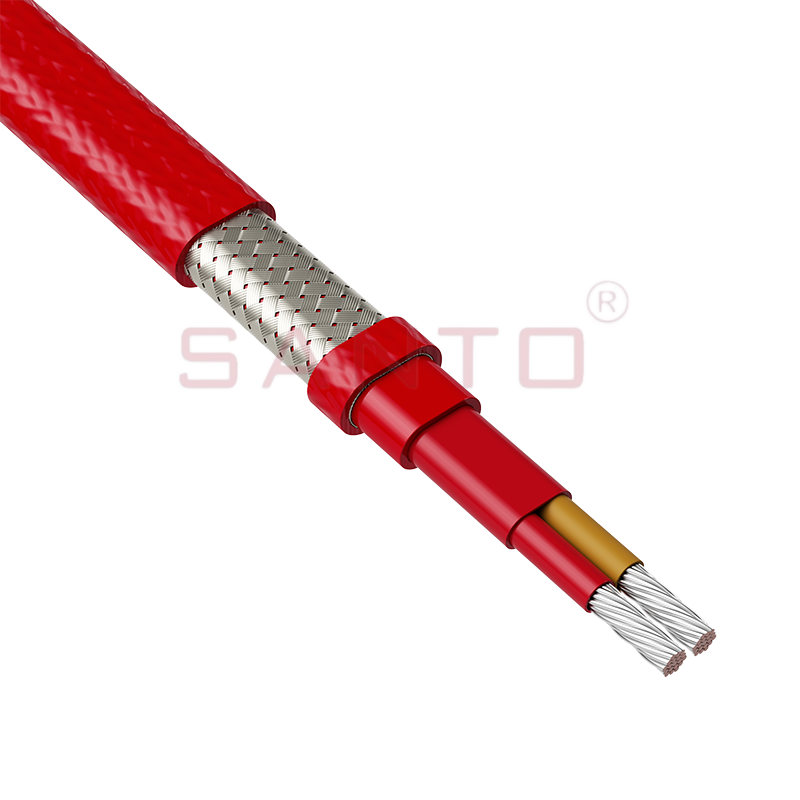
For many above-ground oil lines and smaller branch lines, a self-regulating cable such as the UFA series is a practical starting point because its output adjusts along the pipe and it can be cut in the field.
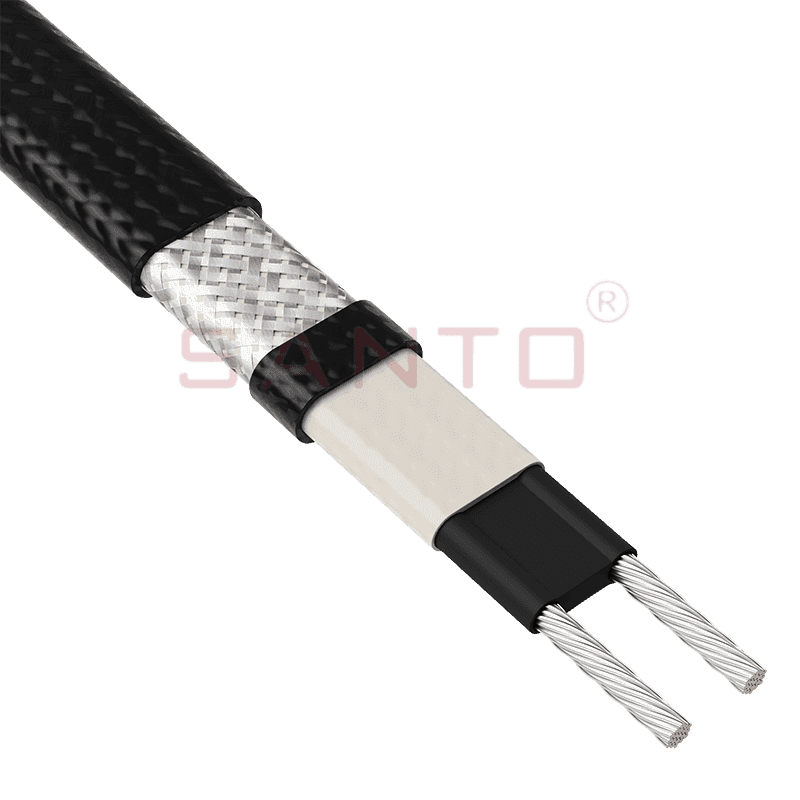 SANTO UFA Self-Regulating Heat Tracing CablesFor above-ground oil lines and smaller branches, these field-cuttable self-regulating cables adjust output along the pipe and suit frost protection up to 65°C.View Product →
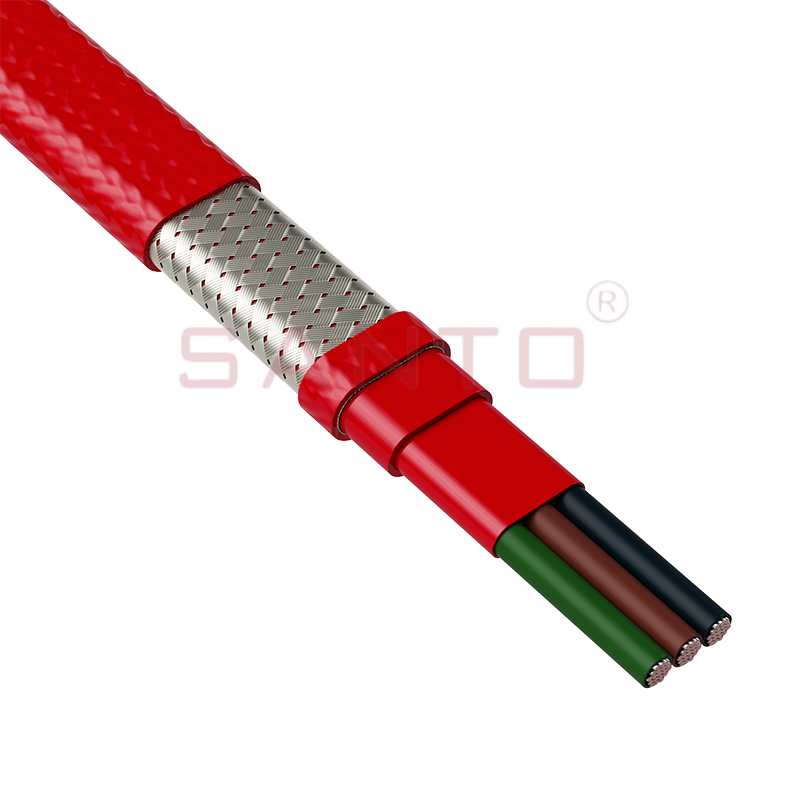
The site’s electric heat tracing product range covers self-regulating, power-limiting, constant wattage, mineral insulated, and skin-effect architectures, so the cable type can follow the heat-loss calculation rather than the other way round.
How to Size a Winterization System Without Overheating
Sizing is a heat-balance calculation, not a guess based on pipe length. Start with the required maintain temperature, then calculate heat loss at the lowest expected ambient condition and add a verified design margin.
- Define the maintain temperature from crude pour point, water content, wax appearance, and hydrate risk.
- Use the lowest expected air or soil temperature, including wind chill for exposed lines.
- Record insulation material, thickness, condition, and jacketing.
- Note pipe diameter, length, burial depth, supports, valves, and flanges.
- Check cable output at start-up and steady state, voltage, and maximum circuit length.
- Confirm thermostat range, sensor type, alarm strategy, and area classification.
- Verify that the cable sheath temperature stays within fluid and insulation limits.
Long-distance and high-temperature lines
Long or high-temperature oil lines often need a different cable architecture than short freeze-protection circuits. Power-limiting and skin-effect systems can be more suitable where circuit length and temperature stability matter, but they demand tighter electrical design and commissioning.
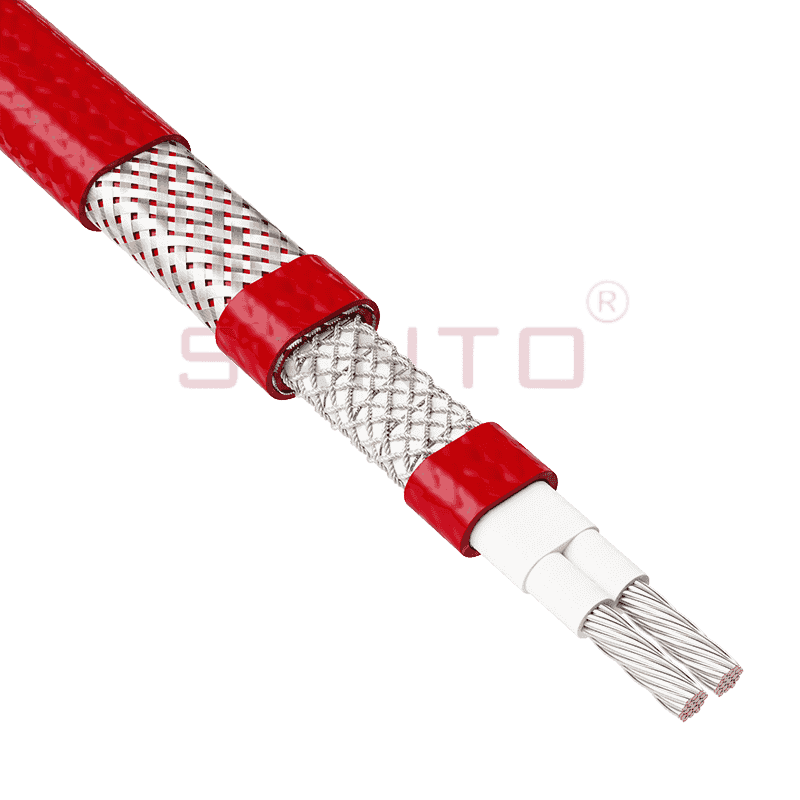 ACC-CT Power-Limiting Heat Tracing CablesFor long or high-temperature oil lines, these power-limiting cables offer high output, 480 V long-circuit options, fluoropolymer jackets, and hazardous-area approvals; T-class must be calculated.View Product →
Do not mix cable types on one controller without checking the output curve, sensor response, and alarm logic. A controller tuned for one cable family may cycle or overheat another.
Control and Monitoring: The Difference Between a Safe Line and a Frozen Line
Control is what turns a heating cable into a reliable winter system. Ambient sensing is acceptable only for short, simple circuits where pipe temperature follows air temperature closely; oil lines with valves, flanges, and varying flow usually need line sensing.
- Place the sensor on the pipe wall, away from the cable, at the coldest or most critical point.
- Set the maintain temperature with enough margin for control tolerance, but below fluid and cable limits.
- Use alarms for high temperature, low temperature, sensor failure, and power loss.
- Keep a circuit schedule with setpoints, alarm response, and cable type.
 HDBK-WK Series Explosion-Proof Temperature ControllerFor electric tracing control in hazardous areas, this intelligent thermostat replaces mechanical controllers and adds current protection, fault warnings, monitoring, and communication.View Product →
In hazardous areas, verify that the thermostat, sensor, and junction boxes carry the correct protection rating for the zone. A control failure can be more dangerous than a frozen line if it allows uncontrolled heating.
Installation Details That Decide Winter Performance
Most winter failures are installation details, not cable defects. The cable must be thermally coupled to the pipe, protected from moisture, and installed without overlaps or sharp bends that violate the product instructions.
- Use straight runs for simple freeze protection; spiral-wrap only when extra watts per meter are needed and the cable permits it.
- Fix the cable with foil tape and approved attachments so it stays in contact with the pipe.
- Give valves, flanges, supports, and dead legs separate trace loops or extra cable.
- Seal insulation jackets and penetrations to keep water out.
- Keep cold leads and junction boxes dry and accessible.
- Test insulation resistance and continuity before and after insulation is closed.
- Do not overlap self-regulating cable unless the manufacturer’s instructions allow it.
If the line already has heat tracing, a pre-winter inspection should include insulation condition, sensor calibration, alarm tests, and a thermal image of each circuit under stable load.
Commissioning and Pre-Winter Checks
Commissioning and pre-winter checks are the cheapest insurance against a frozen line. A circuit that passes in autumn is far less likely to fail during a cold snap, and recorded readings make later faults easier to diagnose.
- Verify circuit resistance and insulation resistance against design values.
- Confirm thermostat setpoints, sensor calibration, and alarm response.
- Test earth leakage or GFCI protection.
- Inspect insulation for gaps, water ingress, and mechanical damage.
- Use thermal imaging after the line reaches a stable temperature.
- Keep spare thermostats, sensors, tapes, and junction box gaskets.
- Record as-found and as-left readings for each circuit.
Frequently Asked Questions
Do oil pipelines freeze at 0°C?
Not necessarily. The oil may remain liquid below 0°C, but water in the oil can freeze, wax can gel, and hydrates can form. The risk temperature depends on the crude, water content, pressure, and flow conditions.
Can electric heat tracing be retrofitted to an existing pipeline?
Yes, but the line must be assessed for insulation condition, available power, sensor locations, and hazardous-area classification. Retrofit designs often need more attention to valve and support heat sinks than new builds.
What maintenance temperature should a crude oil line hold?
Set the maintain temperature above the pour point and above 0°C for any water phase, with a margin the fluid and cable can tolerate. For waxy crude, the target is usually above the wax appearance temperature; confirm it with fluid data and operating experience.
Is insulation alone enough to prevent freezing?
No. Insulation slows heat loss but does not add heat. A long shutdown or a cold snap can still pull the line below its critical minimum. Insulation and heat tracing are a system.
How do I know if heat tracing is working?
Check circuit current or resistance, thermostat readings, alarm status, and thermal images during stable operation. A cable can be energized and still fail to deliver heat if it is damaged, poorly bonded, or covered by wet insulation.
Preventing oil pipeline freezing in winter comes down to a controlled heat balance: calculate the heat loss, insulate the line, select a tracing technology that matches the temperature and circuit length, control it with line sensing where possible, and verify the installation before winter. SANTO supplies self-regulating, power-limiting, constant wattage, mineral insulated, and skin-effect heat tracing, plus thermostats and accessories for oil and gas pipeline winter protection.