English
  English
 русский
 日本語
日本語 Español
 中文简体
中文简体
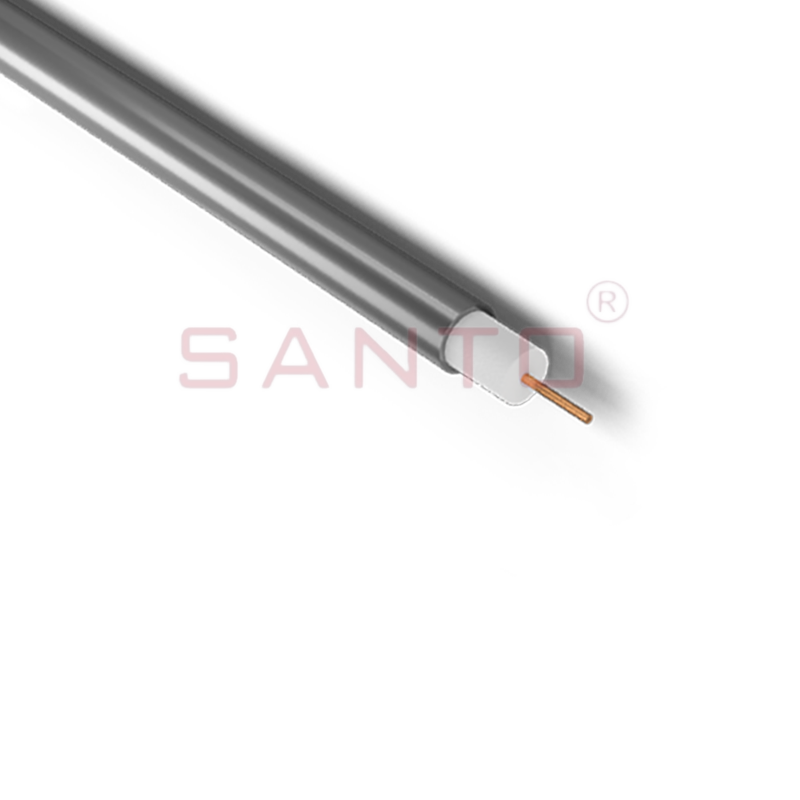
Skin effect heat tracing works by applying alternating current (AC) to an insulated conductor that runs inside a ferromagnetic steel tube attached to the pipeline. The return current concentrates on the inner wall of the tube because of the AC skin effect, and the tube's resistance turns that current into heat. The heat passes through the tube wall and warms the pipe surface, which is why the system can maintain temperature along several kilometres of pipeline from a single power feed point.
Content
What Is Skin Effect Heat Tracing?
Skin effect heat tracing (SECT) is a series electric heating method in which the steel tube itself, not a heating cable, is the heating element. A transformer feeds current into an insulated conductor inside the tube, and at the far end the current transfers to the tube and returns toward the power feed. Because the tube is ferromagnetic, the returning current stays in a thin inner layer, and the tube's resistance produces the required watts per metre.
The technique has been used since the early 1970s for heavy-oil transfer lines, chemical plants, offshore facilities, and long buried pipelines, where steam tracing or parallel heater cables would require too many supply points. The name "skin effect" describes the AC phenomenon in which current concentrates on the surface of a conductor; in SECT, the active surface is the inside wall of the heat tube, so tube wall thickness and current are selected together to give an even heat output along the route.
How the Skin Effect Generates Heat
Heat generation follows four steps: feed current, outbound travel, return on the tube's inner skin, and I²R heating that conducts into the pipe.
- A power transformer feeds alternating current into an insulated conductor that runs through the heat tube to the far end.
- At the end termination, the current transfers from the conductor to the steel tube.
- The return current flows along the inner surface of the tube because the AC skin effect keeps it on that thin layer.
- The tube wall's resistance converts the current into heat, and this heat conducts through the tube wall to the pipe surface.
At 50–60 Hz mains frequency, the effective skin depth in carbon steel is only a few millimetres. The design therefore uses a tube wall that matches this layer and a current level that delivers the specified watts per metre. Changing the feed voltage changes the current and, therefore, the heat output.
Key Components of a Skin Effect Heat Tracing System
A complete SECT system contains five main components, and each one has a direct effect on reliability and safety.
| Component | Function | Selection consideration |
|---|---|---|
| Heat tube | Welded or clamped to the pipe; the tube wall is the heating element | Carbon steel for general service; stainless steel for corrosive environments |
| Insulated conductor | Carries current from the feed point to the end termination | Insulation rated for the system voltage and maximum tube temperature |
| Power feed assembly | Connects the supply to the conductor and tube | Include overload protection and a hazardous-area enclosure when required |
| End termination | Completes the circuit and seals the far end of the tube | Must resist moisture ingress and allow thermal expansion |
| Temperature controller | Maintains the pipe at the required setpoint | Sensor range must cover the maintained temperature and expected ambient conditions |
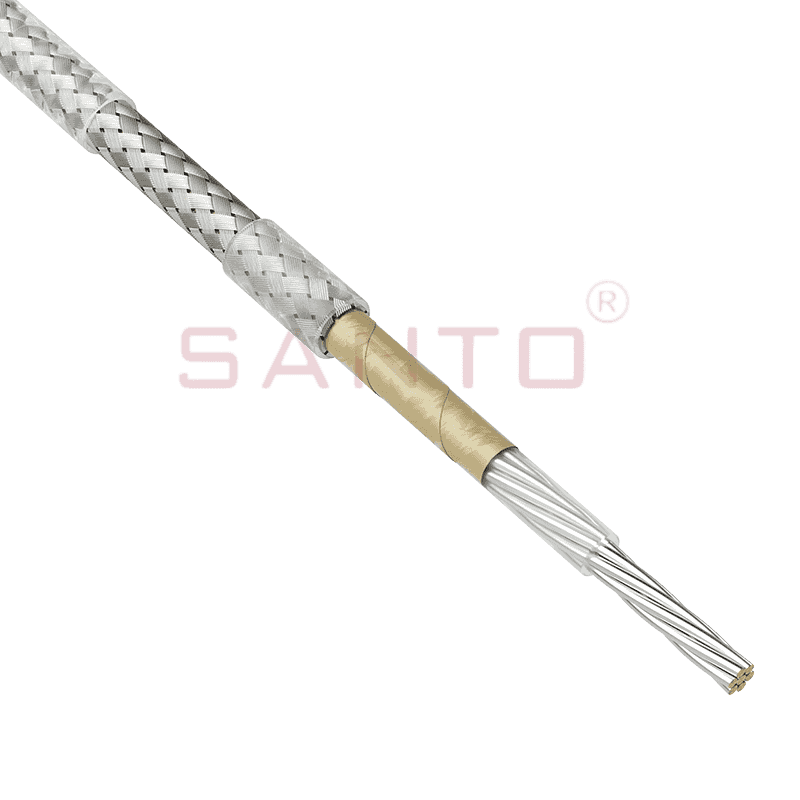
For high-temperature process lines, the conductor insulation and tube materials must hold their ratings under continuous load. SANTO's STS-HT series is designed for this service.
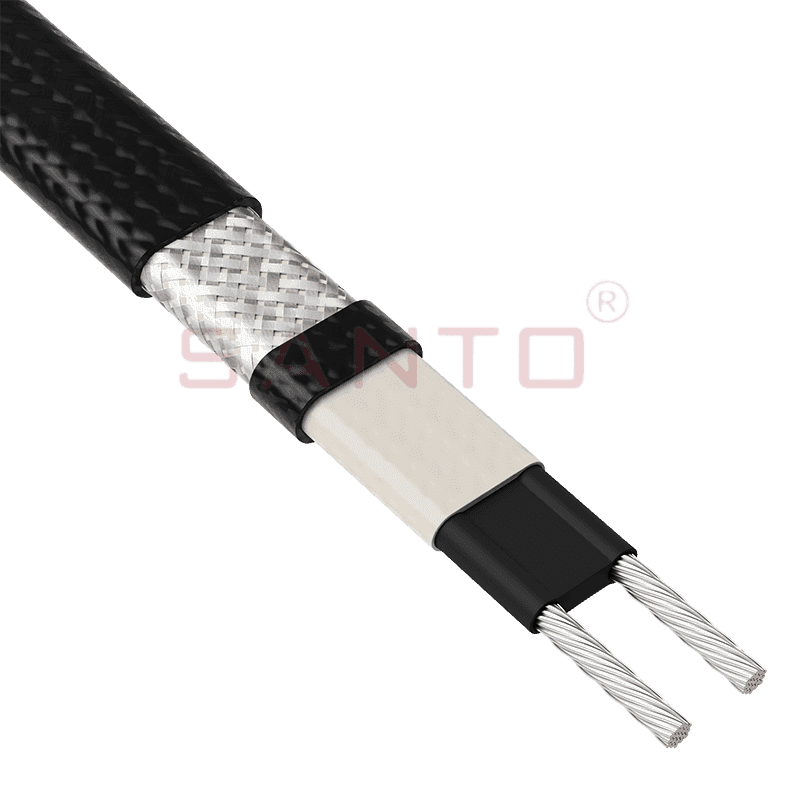
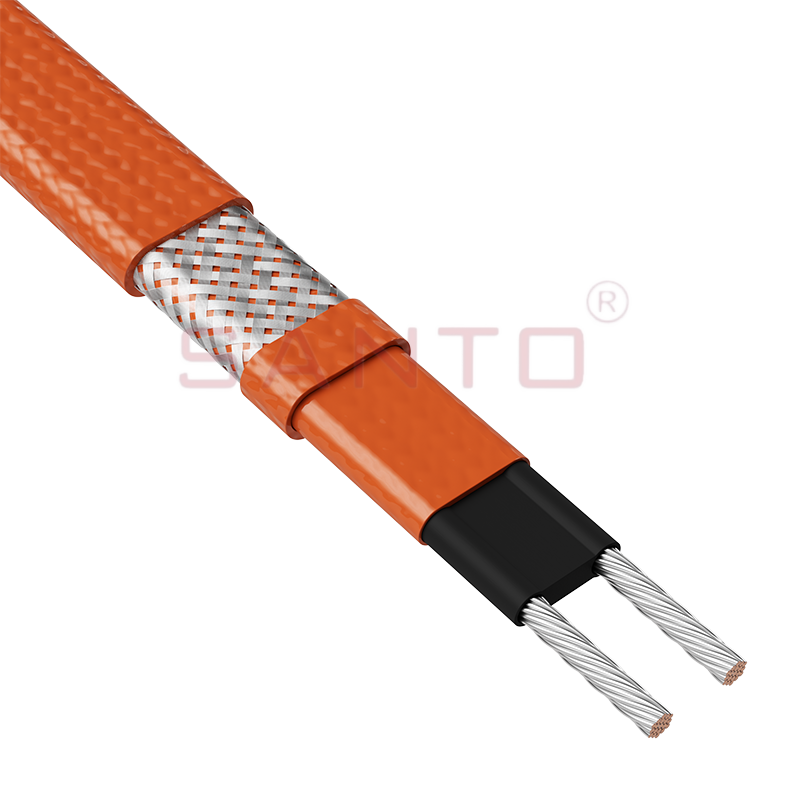
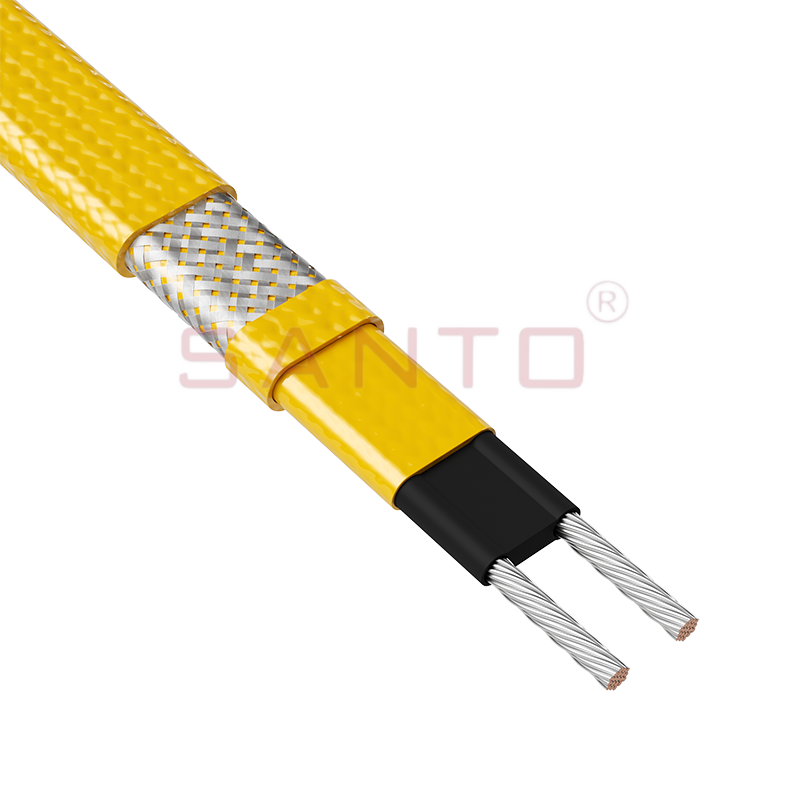
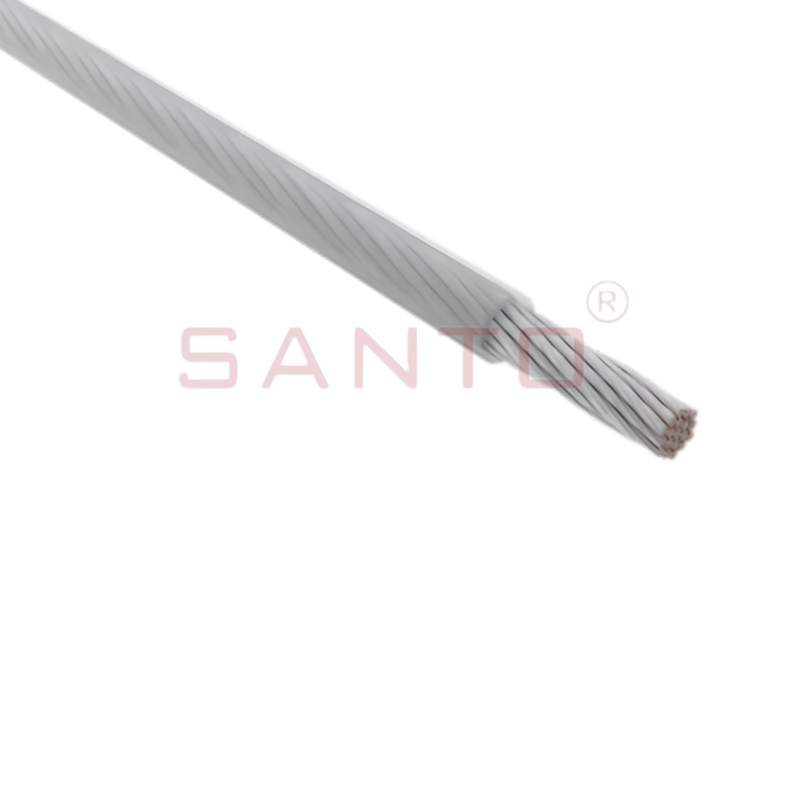 SANTO STS HT Skin-Effect Tracing Wire for High-Temperature Process LinesDesigned for high-temperature service, this skin-effect tracing wire keeps conductor insulation and tube materials within ratings under continuous load, making it suitable for demanding process heat-tracing applications.View Product →
Where Skin Effect Heat Tracing Makes Sense
Choose skin effect heat tracing when the line is long, supply points are limited, and cooling the product is not acceptable.
- Long heavy-oil transmission lines that must stay hot even during a shutdown.
- Buried or inaccessible routes where installing junction boxes every few hundred metres is impractical.
- Hazardous areas, because the live conductor is enclosed in a sealed steel tube; only the feed and end termination need explosion-proof housings.
- Lines carrying high-viscosity or wax-forming fluids that require a stable flow temperature.
Because a single feed can cover several kilometres, the system also reduces resistance and line losses in long-distance power transmission compared with running numerous parallel heater circuits.
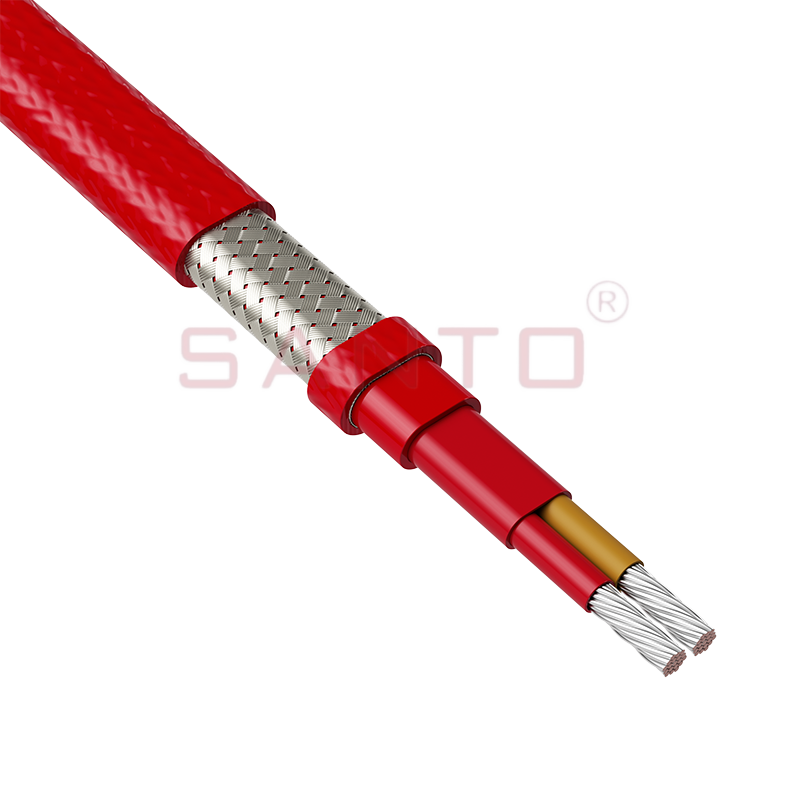
For very long lines, a higher feed voltage lowers the current for the same heat output and extends the achievable spacing between feed points; SANTO's STS-HV series is built for that duty.
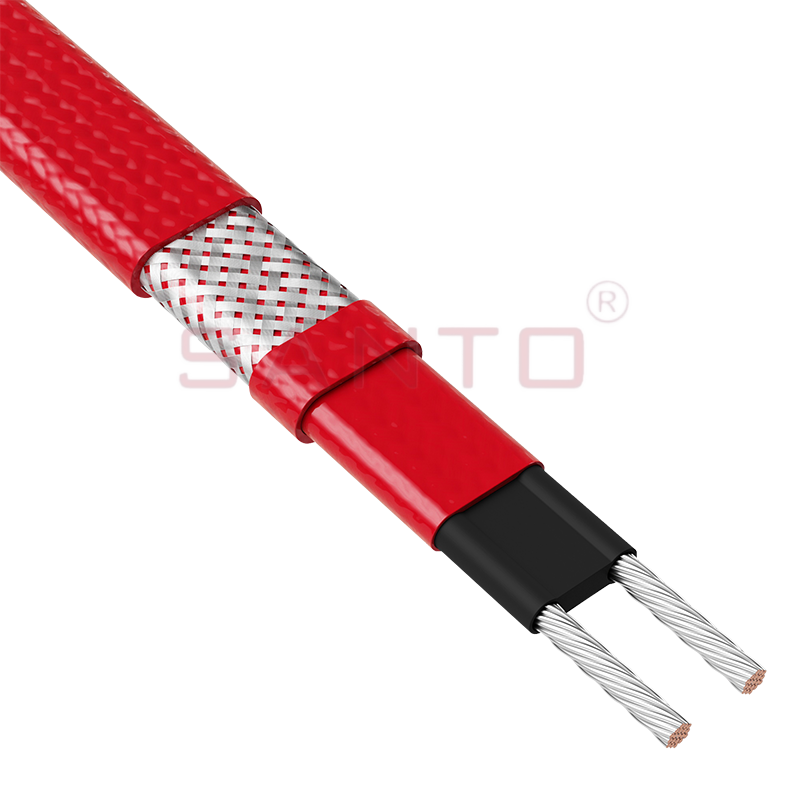
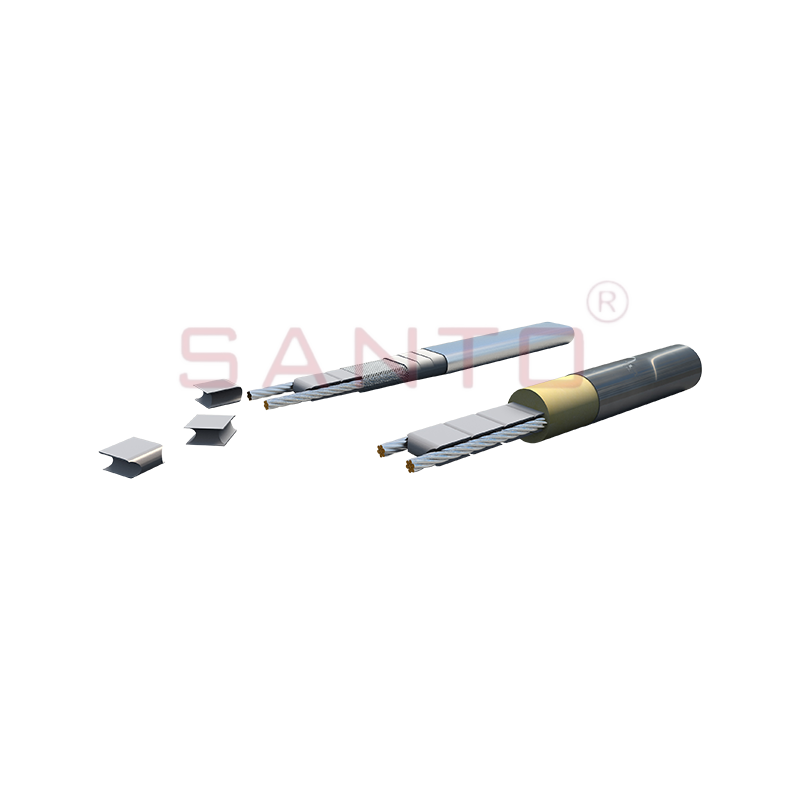
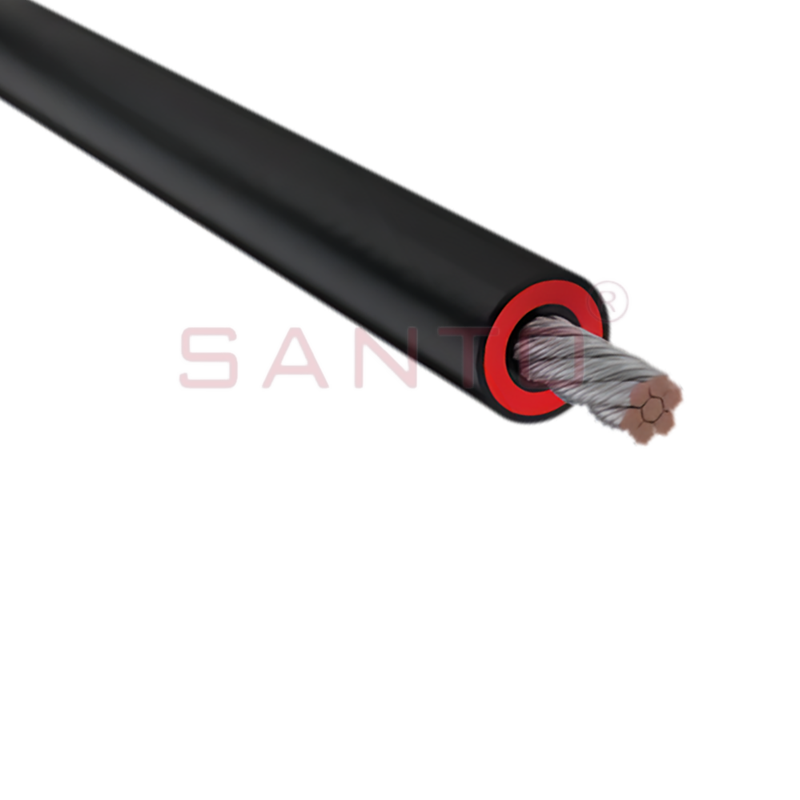 SANTO STS HV Skin-Effect Tracing Wire for Long-Line High-Voltage DutyBuilt for very long circuits, this high-voltage variant reduces current for a given heat output and extends feed-point spacing. It suits installations where fewer supply points and extended line lengths are required.View Product →
Skin Effect vs. Other Heat Tracing Technologies
Skin effect tracing is often compared with cables because the choice depends on circuit length, heat output, and the number of feed points.
| Technology | Typical circuit length per feed | Best suited for | Main trade-off |
|---|---|---|---|
| Skin effect (SECT) | Several kilometres | Long pipelines, heavy oil, buried or offshore lines | Higher initial cost; detailed design required |
| Self-regulating cable | About 100–150 m | Pipe freeze protection, tanks, short branches | Many feed points and controls |
| Constant wattage cable | About 200–500 m | Medium-length process lines | More terminations and junction boxes |
| Mineral-insulated (MI) cable | About 500–1,000 m | High-temperature and small-bore applications | High cost; skilled installation |
For one long, straight route, SECT usually wins on total installed cost because it removes dozens of feed points, junction boxes, and branch circuits.
Design Considerations and Procurement Risks
Design starts with a heat-loss calculation, not with a product selection. Maintained temperature, minimum ambient temperature, pipe size, insulation type and thickness, wind, and moisture exposure all define the watts per metre required.
Only after the heat loss is known can the engineer size the current, check voltage drop over the full circuit length, and choose the tube material: carbon steel for normal industrial service, stainless steel where corrosion is a concern.
The most common procurement problems are not about the cable but about the complete scope.
- Incomplete scope: specifying only the tube and conductor while omitting feed assemblies, end terminations, controllers, and junction boxes.
- Unverified certifications: hazardous-area enclosures must match the zone and gas group, not just a brochure claim.
- Missing test records: insulation resistance and continuity tests should accompany every shipped circuit.
- Poor installation documentation: clamping spacing, bending radius, and heat-transfer compound have a direct effect on system life.
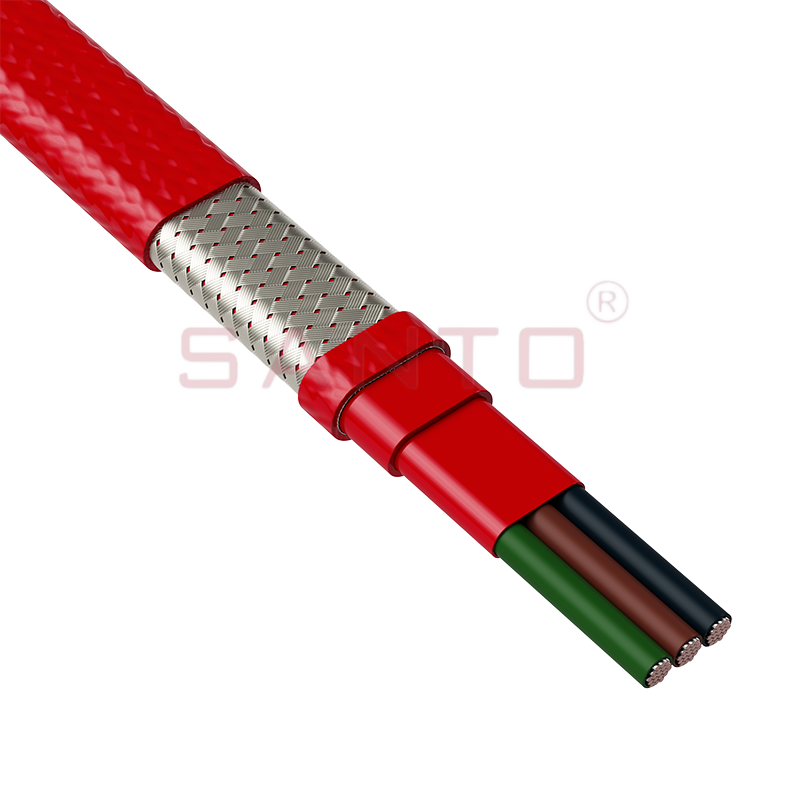
Medium-temperature duties sit between the high-temperature and high-voltage variants. SANTO's STS-MT series covers that operating range.
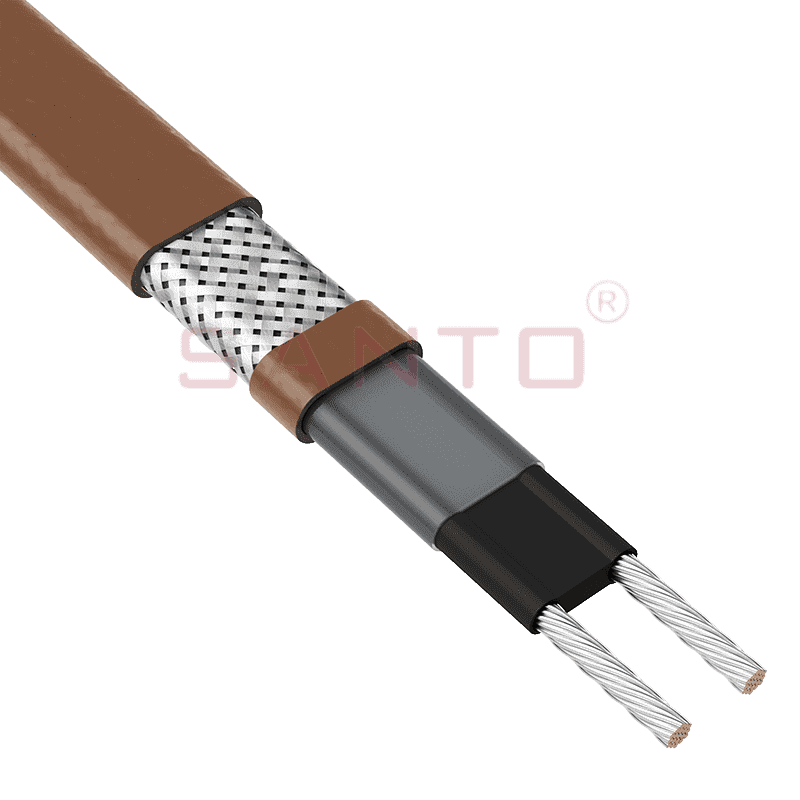
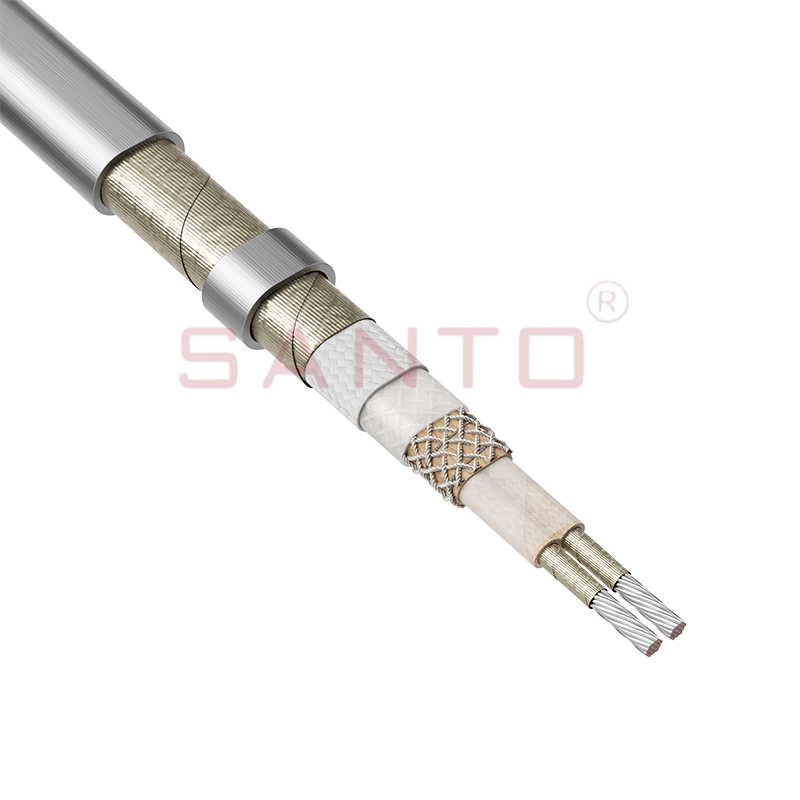
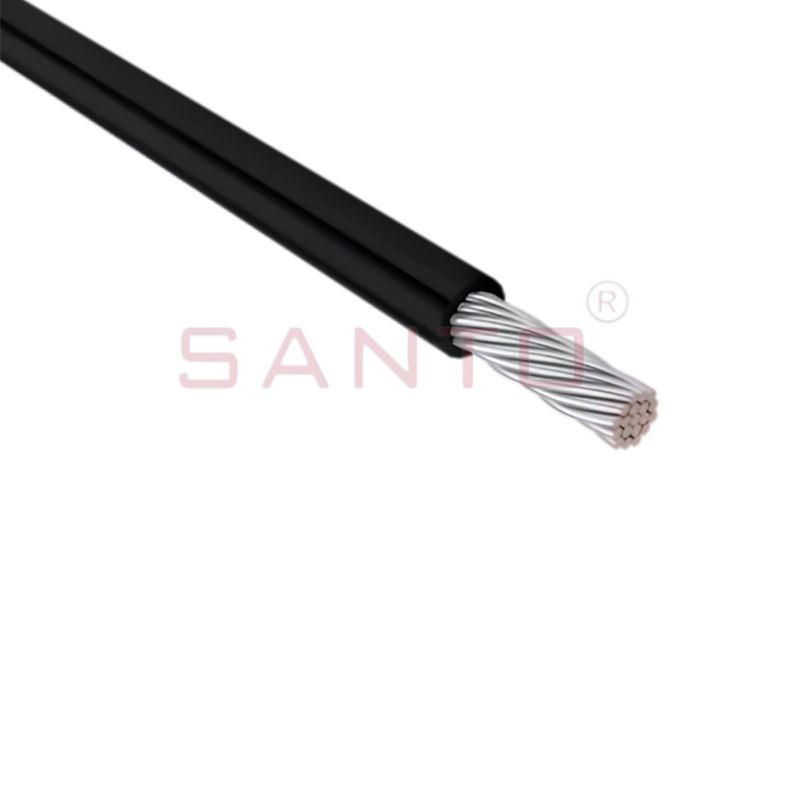 SANTO STS MT Skin-Effect Tracing Wire for Medium-Temperature ServiceCovering the medium-temperature operating range, this variant fits duties between the high-temperature and high-voltage series. It supports long lines with a single feed point, limited by voltage drop and tube temperature.View Product →
Frequently Asked Questions
How far can one skin effect system heat a pipeline?
With a single feed point, several kilometres is standard. The practical limit is set by voltage drop and the maximum allowable tube temperature. If the route is longer, the system can be zoned with additional feed points.
Is skin effect heat tracing safe in hazardous areas?
Yes, because the heating element is a sealed steel tube and the live conductor is not exposed along the line. The power feed and end termination must be installed in enclosures rated for the specific zone and gas group.
Can a failed conductor be replaced?
In most designs the conductor can be pulled out and replaced without cutting the heat tube off the pipe. This is a major advantage over welded or cast heating elements.
What maintenance does a skin effect system require?
Routine maintenance is insulation-resistance testing, visual inspection of feed and end-termination enclosures, and verification of thermostat setpoints. No regular cleaning or recalibration of the tube itself is needed.
Skin effect heat tracing is the most practical answer when a long pipeline needs even heat and you want to minimize power supply points. Start the project with a heat-loss calculation, specify the complete system, and verify the supplier's technical documentation and certifications. For a design review on your specific line, contact the SANTO engineering team.