 English
  English
 русский
 日本語
日本語 Español
 中文简体
中文简体The SANTO UFA range of self-regulating heating cables is mainly used for frost protection of pipes and vessels but can also be used to maintain processes up to 65°C. These heating cables are available...
See Details
Content Glass fiber heating tape is a resistive electrical heating element where a heating conductor is insulated and mechanically protected by a woven glass fiber jacket. When current passes through the internal resistance wire, it generates heat, and the outer glass fiber layer serves three simultaneous functions: electrical insulation, thermal resistance, and structural reinforcement. This combination makes the tape suitable for direct contact heating on metal pipes, vessels, and irregularly shaped equipment where other insulation materials would degrade or soften. The term positions itself within a broader family of industrial heat tracing products, but it differs in key ways from common alternatives. While self-regulating heating cables adjust their power output based on surrounding temperature, glass fiber heating tape operates with a largely constant resistance. This means its power output stays steady as long as the applied voltage remains unchanged, placing it in the constant-watt category of heating devices. Understanding this distinction is critical when selecting a heating solution for specific operating conditions. A typical glass fiber heating tape consists of a flat or round resistance alloy wire—often nickel-chromium or copper-nickel—wrapped or knit directly into a high-temperature glass fiber yarn. In some designs, the yarn is braided around the conductor to form a tight, uniform insulation layer that withstands continuous flexing. A silicone rubber outer coating may be added where moisture resistance or additional dielectric strength is required, but many industrial versions rely solely on the glass fiber weave for both insulation and surface protection. The glass fiber itself is the defining material. It shows negligible elongation under tension, remains dimensionally stable at temperatures that would melt PVC or silicone-based insulation, and provides a high dielectric strength even after repeated heating cycles. For applications demanding sustained heat output over many hours or days, this material choice directly eliminates the risk of insulation creep or short circuits caused by thermal expansion mismatch. Engineers working with high-temperature constant power heating cables will recognize the same design principle—a rugged internal conductor paired with an insulation system that holds its electrical and mechanical properties under thermal load. Selecting a glass fiber heating tape requires evaluating several interdependent specifications: the maximum continuous temperature the insulation can withstand, the power density per unit length, the supply voltage, and the mechanical durability of the finished tape. A tape rated for 200°C may underperform in a 190°C application if the wattage density is too low to overcome system heat loss. Conversely, a high-wattage tape with a lower temperature rating may fail prematurely when ambient conditions push the insulation beyond its limit. Continuous operating temperature and short-term peak tolerance are not the same. A tape with a published continuous rating of 260°C may tolerate brief excursions to 300°C during startup or process spikes, but sustained operation above the rated value will progressively embrittle the glass fiber and reduce dielectric strength. Insulation class provides a standardized reference: many glass fiber heating tapes align with Class H (180°C) or higher, depending on the binder and yarn composition. Before finalizing a specification, request a full test report that lists the temperature index of the insulation system, not just the alloy wire rating, because the insulation is typically the life-limiting component. In practice, a tape must be selected with a safety margin between its continuous rating and the maximum expected service temperature. A 20-30% buffer is a common engineering practice in industrial heat tracing projects and helps accommodate transient conditions without pushing the insulation into an accelerated aging regime. Because glass fiber heating tape is a constant-resistance device, its power output is governed by Ohm's law. A tape specified at 30 watts per meter at 120 volts will consistently deliver approximately that power, independent of ambient temperature swings, as long as the voltage is held stable. This behavior contrasts sharply with self-regulating cables, which reduce power as they warm up. The uniform output of glass fiber tape is an advantage when process temperature stability is required, but it also makes external temperature control mandatory—without a thermostat or process controller, the tape will continue heating and can exceed safe limits. Heating uniformity across the tape surface depends largely on the spacing and layout of the resistance element. Closely spaced parallel conductors or a dense helical wrap produce a more even temperature profile than widely spaced single-strand designs. When wrapping small-diameter tubes, installers must maintain consistent pitch to avoid localized hot or cold bands. Glass fiber heating tape finds practical use wherever moderate to high temperatures must be delivered through a flexible, wrappable, and electrically insulated medium. The product is not designed for long-distance pipeline tracing in the way that mineral-insulated or self-regulating cables are; instead, its value lies in localized heating of components where mechanical flexibility and direct surface contact matter most. Instrument and sampling lines in analytical systems commonly use glass fiber tape to keep trace gases above dew point. Laboratory glassware, vacuum chambers, and test rigs in semiconductor and medical device manufacturing also depend on the tape's ability to maintain elevated temperatures without outgassing from plastic-based insulation. In barrel and drum heating, the tape is spiral-wound around the container and secured with mechanical fasteners or high-temperature adhesive tape, providing a simple retrofit heating solution when jacketed systems are unavailable. For short runs of small-diameter metal pipe, glass fiber heating tape can serve as an effective freeze protection tool. A 15-watt-per-meter tape wrapped at an appropriate pitch will offset heat loss through standard insulation and keep water or viscous fluids flowing. The installation is straightforward: clean the pipe surface, apply the tape in a uniform spiral or straight run, fix it in place, add thermal insulation over the assembly, and connect power through an approved junction box. However, this application highlights the product's natural limits. Because the tape delivers constant power, it must always be paired with an ambient-sensing or pipe-surface-sensing thermostat that interrupts the circuit when temperatures rise above the setpoint. For long pipe networks or areas with complex branching, a self-regulating heat tracing cable for pipe freeze protection offers a simpler and often safer approach, since it automatically reduces output without external control devices. Glass fiber heating tape remains a strong candidate when the application is compact, the required heat density is stable, and a dedicated temperature controller is already part of the system design. Valves, flanges, pump housings, and oddly shaped vessels present a heating challenge that rigid pad heaters and pre-formed jackets cannot always solve. Glass fiber heating tape addresses this by conforming to complex geometry under light tension. The weave structure allows the tape to bend around bolt heads and follow concave profiles without cracking or delaminating, a capability that standard polymer-insulated cables struggle to match at elevated temperatures. Installation on irregular shapes follows a few simple rules: maintain a consistent overlap where the tape crosses itself, avoid sharp corners that could cut the glass fiber yarn, and secure the tape at regular intervals with high-temperature fasteners or glass fiber cord. For items that require frequent removal and reinstallation, the tape can be left slightly loose and tied off with a removable clip system. Minimum bend radius should always be verified against the manufacturer's specification; a radius smaller than the recommended value can kink the internal conductor and create a potential hot spot. The decision to use glass fiber heating tape instead of another heating technology comes down to a few practical parameters: length of the heated zone, required temperature range, surface shape, and whether automatic power adjustment is necessary. The table below summarizes the main differences across four common industrial heating forms. When the heating task involves a long straight pipe run with variable ambient conditions, self-regulating cable often becomes the more practical choice. When the surface is large, flat, or cylindrical and contact uniformity is the priority, a silicone rubber heating solution delivers even heat distribution across a wider area. Glass fiber heating tape fits best in the region between these two: short, localized, high-temperature spots where the installer needs a wrap-around flexible element that can be field-shaped and replaced quickly. Specifying the right tape starts with four concrete numbers: the minimum ambient temperature the installation will see, the desired maintenance temperature, the pipe or equipment material and wall thickness, and the available voltage. From these inputs, the required wattage per meter can be estimated using heat loss calculations that account for insulation type and thickness. As a general rule, higher temperature differentials and thinner insulation demand higher power density, but the wattage must stay below the tape's maximum rated output to preserve insulation life. Mechanical considerations matter equally. If the tape will be removed and reapplied during maintenance cycles, the outer jacket must withstand repeated flexing. In washdown environments, an outer silicone rubber layer or a sealed terminal connection is necessary to prevent moisture ingress. For hazardous areas, all components including the tape, junction boxes, and thermostat must carry the appropriate certification for the zone classification. A disciplined installation sequence prevents early failures and ensures the heating circuit performs as designed. The process begins with verifying that the tape length matches the application—glass fiber heating tape can usually be cut to length in the field, but the cut end must be properly sealed against moisture and electrical tracking. After cutting, the pipe or vessel surface receives a thorough cleaning to remove oil, scale, and moisture that could degrade heat transfer or cause localized hot spots. The tape is then applied according to the documented wrap pattern: straight trace for simple freeze protection on horizontal lines, or spiral wrap when higher heat input per linear meter is needed. Overlapping the tape on itself must be avoided unless the manufacturer explicitly permits it, because trapped heat at the overlap can exceed the insulation rating. Mechanical fastening follows immediately using glass fiber ties, stainless steel bands, or high-temperature adhesive-backed foil tape. Electrical connections should be made only with terminals and junction boxes rated for the ambient temperature range, and all metallic elements must be grounded according to local electrical codes. Finally, the thermostat sensor is placed at the coldest expected spot—typically on the pipe surface under the insulation but away from the heater itself—and the entire circuit is tested at low voltage before full power is applied. Every constant-watt heating circuit without inherent self-limitation carries the risk of overheating if temperature control fails. Glass fiber heating tape is no exception: a stuck contactor or incorrect thermostat placement can allow the tape to reach temperatures far beyond its continuous rating, leading to insulation carbonization, short circuit, or in extreme cases, fire. The primary defense is a correctly sized and positioned temperature sensor linked to a controller that breaks the power circuit at a preset limit. For installations in Class I Division 1 or Zone 1 hazardous locations, an intelligent explosion-proof temperature controller rated for the area is mandatory to ensure that any spark or thermal event remains contained within an approved enclosure. Additional layers of safety include over-temperature cutoff devices independent of the primary controller, ground-fault protection of equipment at the correct mA level, and regular insulation resistance testing as part of a planned maintenance schedule. A brief safety checklist for every installation includes: verify thermostat setpoint is below the tape's continuous rating, confirm ground path continuity, inspect all junction boxes for seal integrity, and test the over-temperature trip function before placing the circuit in automatic operation. Glass fiber heating tape remains a practical, cost-effective tool for localized high-temperature heating where flexibility and direct surface contact matter more than long-distance power transmission. Its woven insulation bridges the gap between low-temperature polymer cables and rigid high-temperature heating elements, and its simple construction makes it easy to understand, specify, and install. The three building blocks that determine a successful application are selecting the right continuous temperature rating, matching power density to the thermal load, and enforcing temperature control without exception. While the tape solves many short-run heating problems, it is not a one-size-fits-all answer. Long pipeline tracing, self-regulating temperature maintenance, and large-area surface heating all call for different technologies. SANTO's engineering team supports industrial users in evaluating the full spectrum: from self-regulating cables and constant-watt heating circuits to silicone rubber blanket heaters and integrated temperature control panels. Contact SANTO to request detailed specifications and receive application-specific selection guidance for your next project.What Is Glass Fiber Heating Tape?
How Glass Fiber Heating Tape Is Constructed
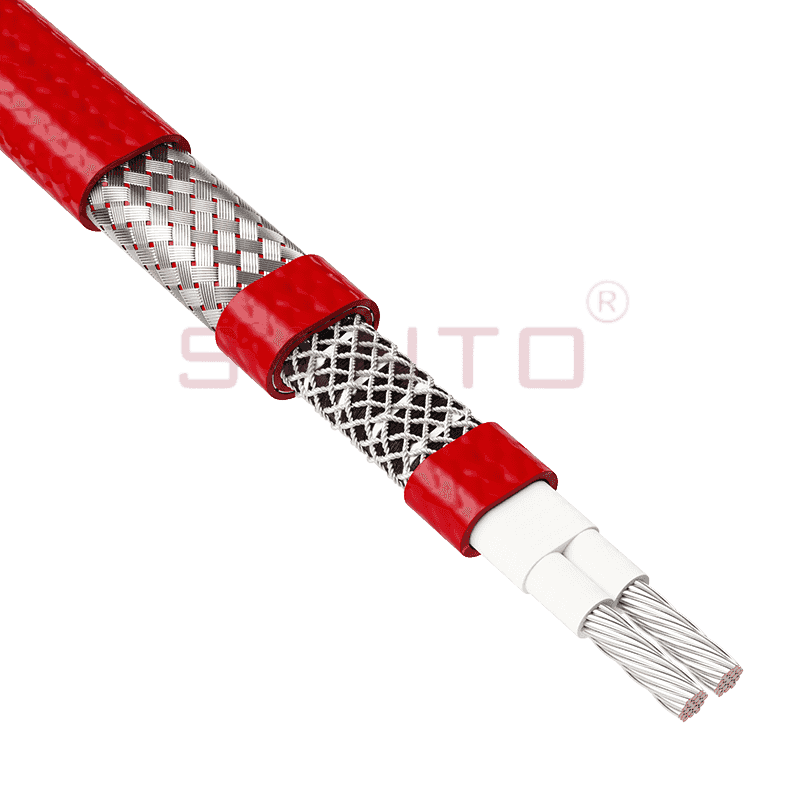 Custom AFF-CT High Temperature Carbon Fiber Constant Power Heating Cable ManufacSanto is a China OEM/ODM AFF-CT High Temperature Carbon Fiber Constant Power Heating Cable manufacturers and AFF-CT High Temperature Carb...View Product →
Key Performance Characteristics
Temperature Ratings and Insulation Class
Power Output and Heating Uniformity
Common Applications of Glass Fiber Heating Tape
Pipe Freeze Protection and Temperature Maintenance
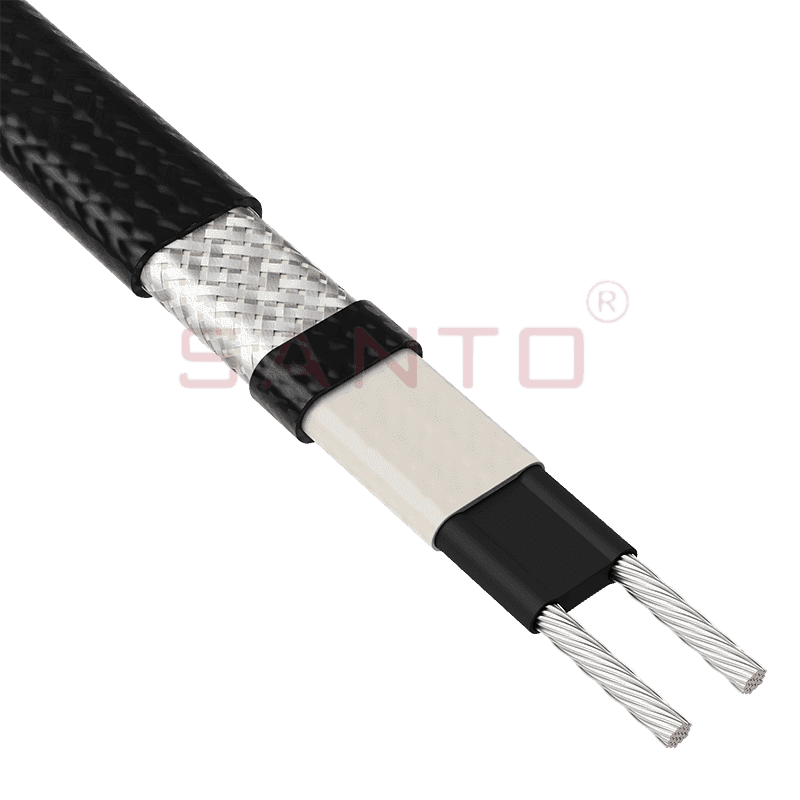 Custom UFA Self-Regulating Heat Tracing Cables Manufacturers, Suppliers - Santo Santo is a China OEM/ODM UFA Self-Regulating Heat Tracing Cables manufacturers and UFA Self-Regulating Heat Tracing Cables suppliers, We ...View Product →
Wrapping Irregular Surfaces and Equipment
Glass Fiber Heating Tape vs. Other Heating Solutions
Feature
Glass Fiber Heating Tape
Self-Regulating Cable
Silicone Rubber Heater
Constant-Watt Cable
Power characteristic
Constant resistance
Self-adjusting
Constant resistance
Constant resistance
Typical application length
Short, localized
Medium to long pipelines
Surface area heating
Medium to long pipelines
Temperature capability
Up to approx. 400°C continuous
Typically below 120°C
Up to approx. 250°C
Up to approx. 600°C
Surface conformity
Excellent on irregular shapes
Limited to linear runs
Excellent on flat and cylindrical surfaces
Limited to linear runs
External control need
Mandatory
Optional
Mandatory
Mandatory
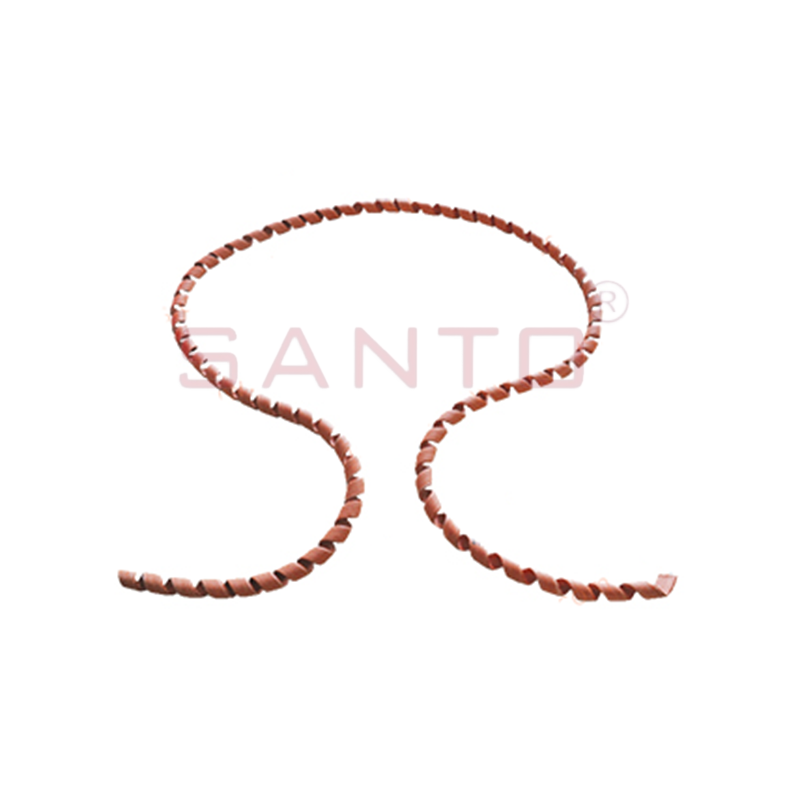 Custom Silicone Rubber Heating System Manufacturers, Custom Silicone Rubber HeatSanto is a China OEM Silicone Rubber Heating System manufacturers and ODM Silicone Rubber Heating System factory, Professional custom Sil...View Product →
How to Select and Install Glass Fiber Heating Tape
Installation Best Practices
Safety Considerations and Temperature Control
Conclusion
The SANTO UFA range of self-regulating heating cables is mainly used for frost protection of pipes and vessels but can also be used to maintain processes up to 65°C. These heating cables are available...
See Details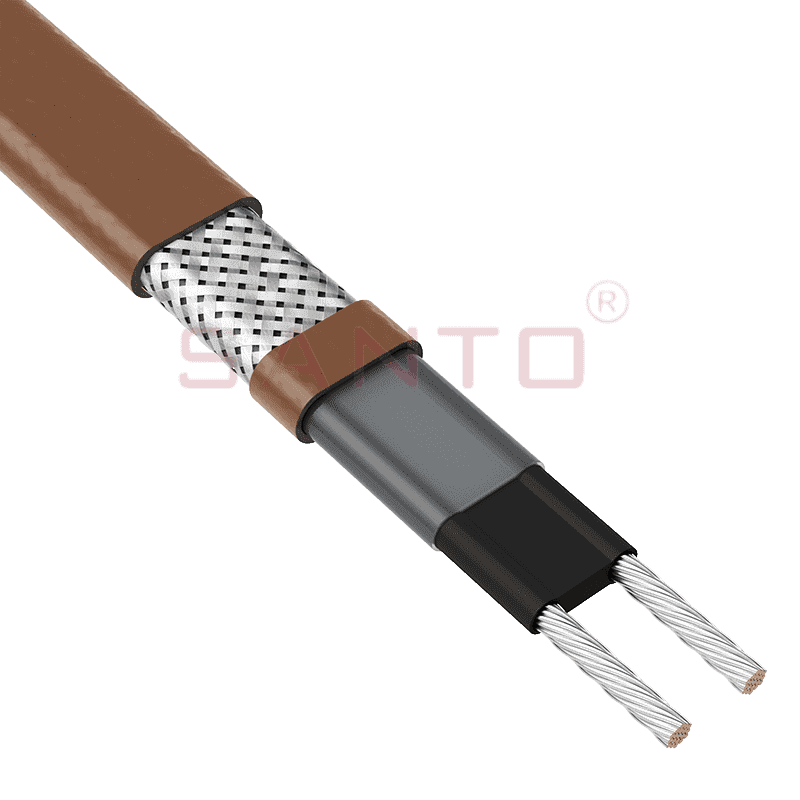
The SANTO UFB range of self-regulating heating cables is mainly used for frost protection of pipes and vessels requiring a higher power output than the UFA heating cables can supply. They can also be ...
See Details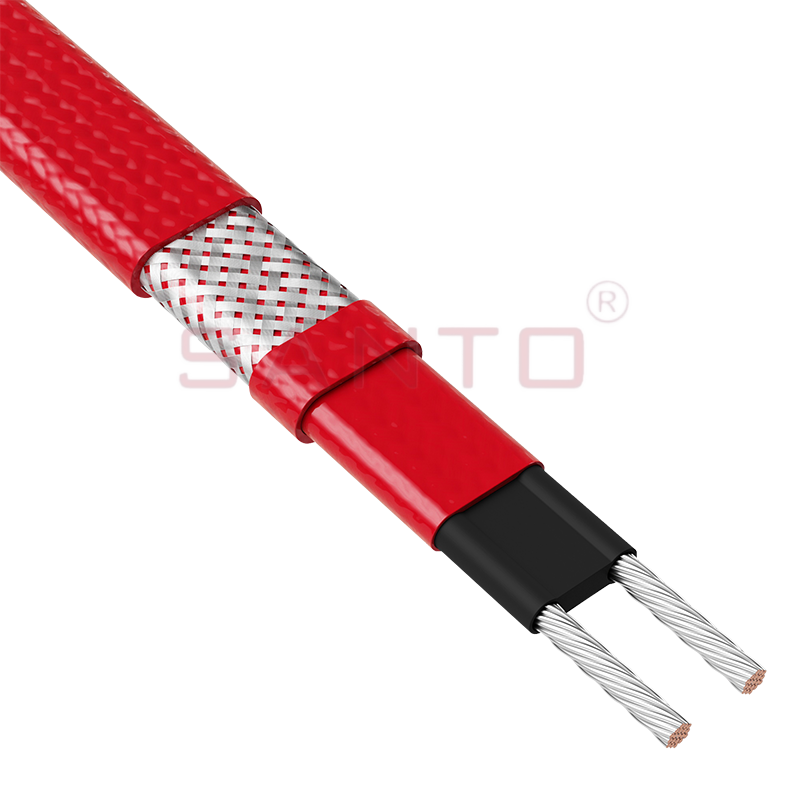
The SANTO UFC range of self-regulating heating cables is used for frost protection of pipes and vessels that require steam cleaning. They can also be used to maintain processes up to 121°C. These heat...
See Details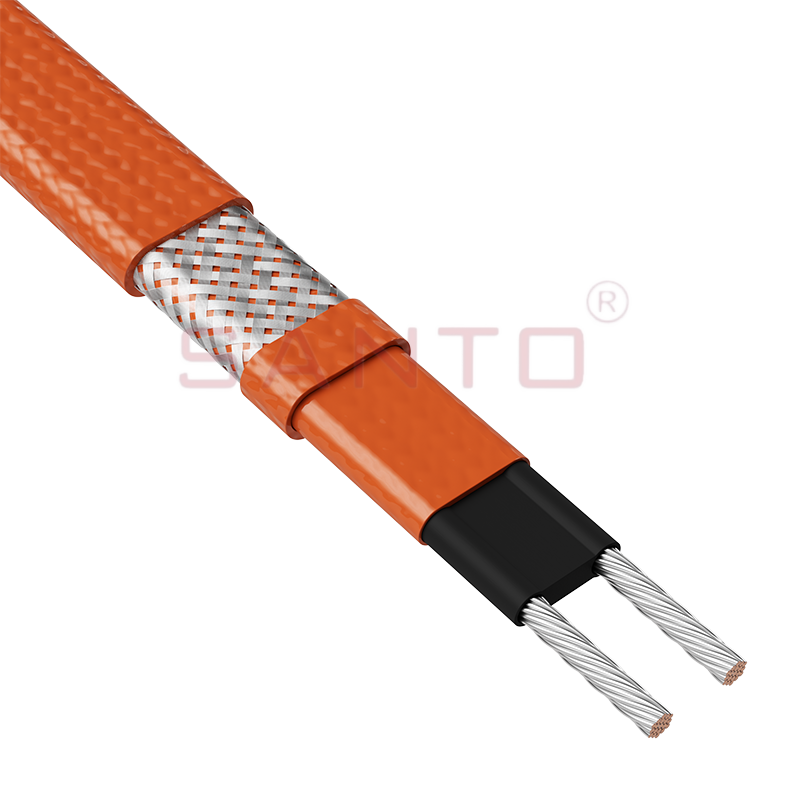
The SANTO UFO range of self-regulating heating cables is mainly used for frost protection of pipes and vessels that require steam cleaning . They can also be used to maintain processes up to 150°C. Th...
See Details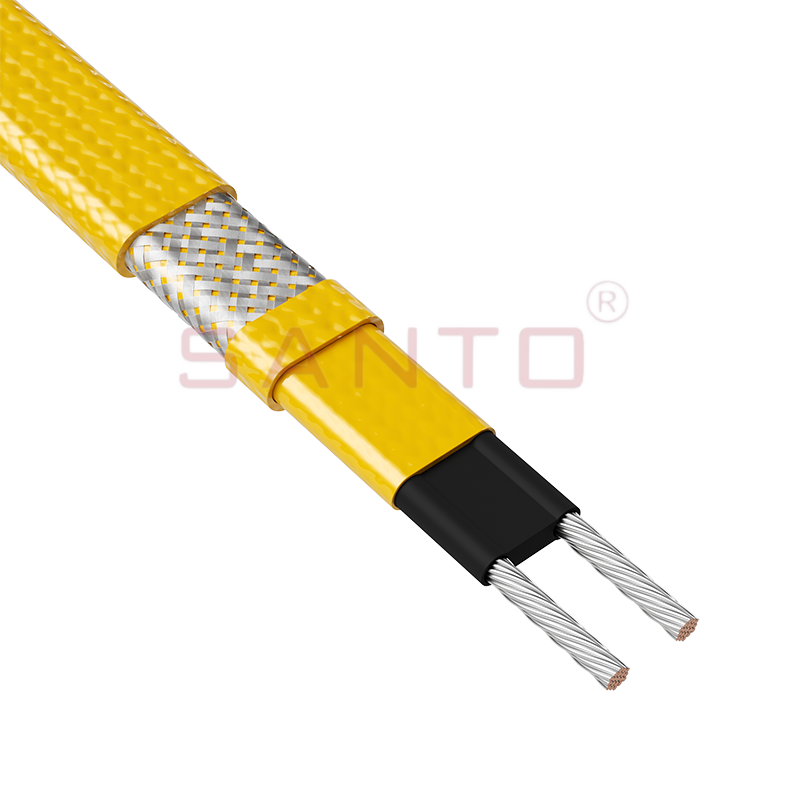
The SANTO UFD series of self-regulating heating cables are mainly used for freeze protection of pipes and vessels, but can also be used to maintain processes up to 200°C. These heating cables are avai...
See Details
SANTO UFY heating wire is suitable for applications that maintain process temperatures up to 260 ℃ and can be steam blown; The self-regulating and parallel circuit heating wires of the UFY series are ...
See Details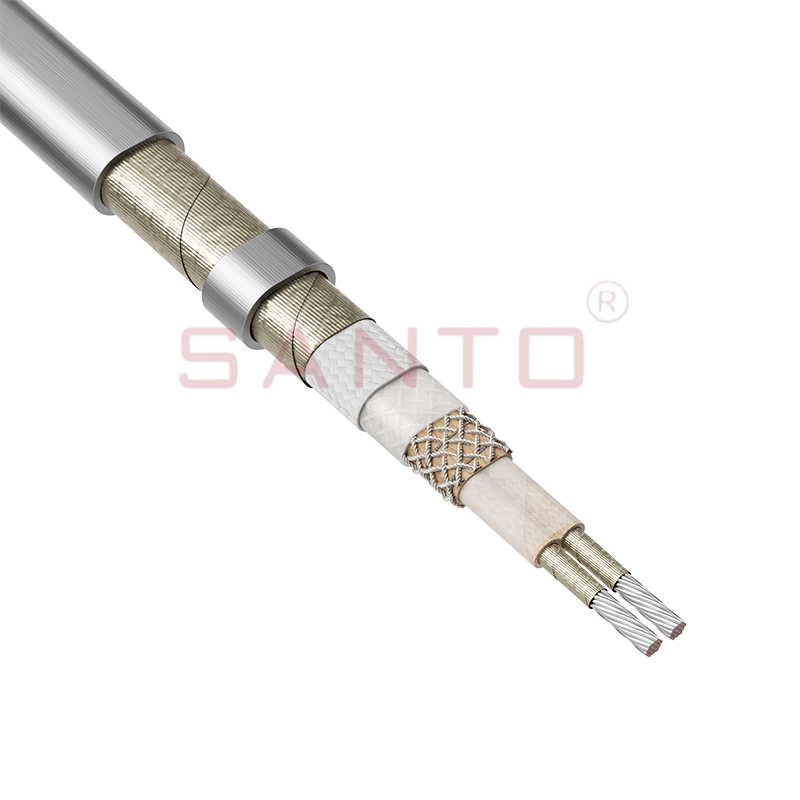
The SANTO UFM series self-regulating heating cables are mainly used for freeze protection of pipes and vessels, but can also be used to maintain processes up to 400°C. These heating cables are availab...
See Details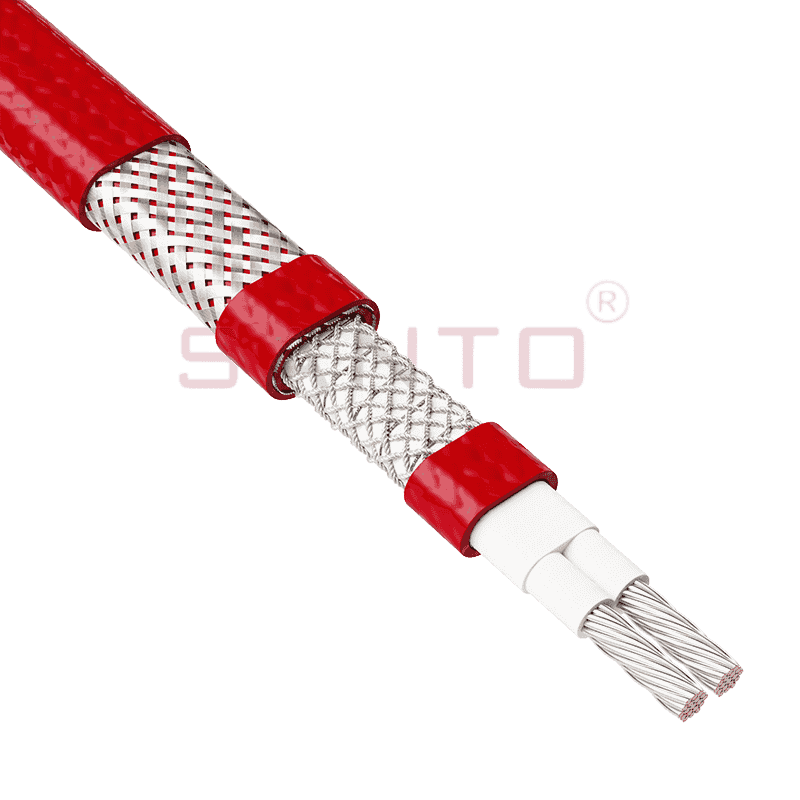
The SANTO ACC range of power-limiting heating cables is mainly used for temperature maintenance of processes and offers the advantage of a high power output at high temperatures which can reduce the n...
See Details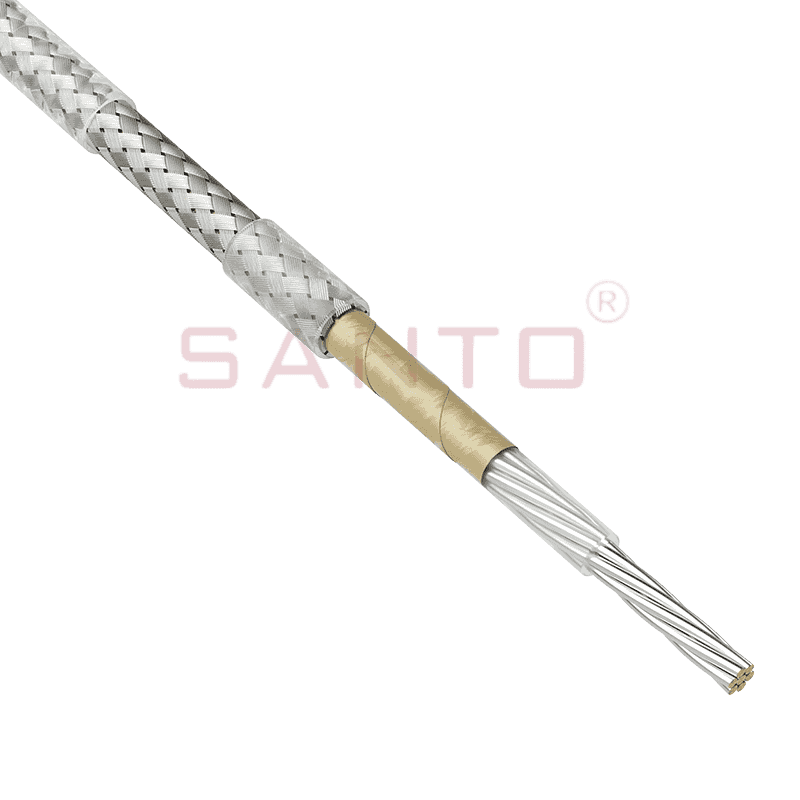
The stranded high temperature conductor is nickel plated to ensure a long life at elevated temperatures in corrosive environments. It is electrically isolated using an innovative sandwich construction...
See Details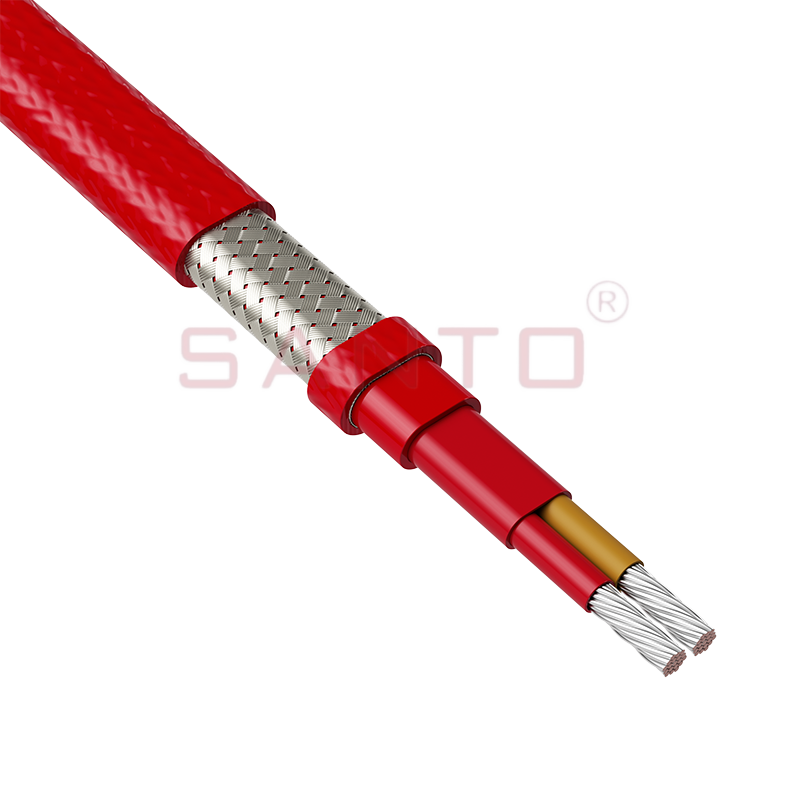
The stranded high temperature conductor is nickel plated to ensure a long life at elevated temperatures in corrosive environments. It is electrically isolated using an innovative sandwich construction...
See Details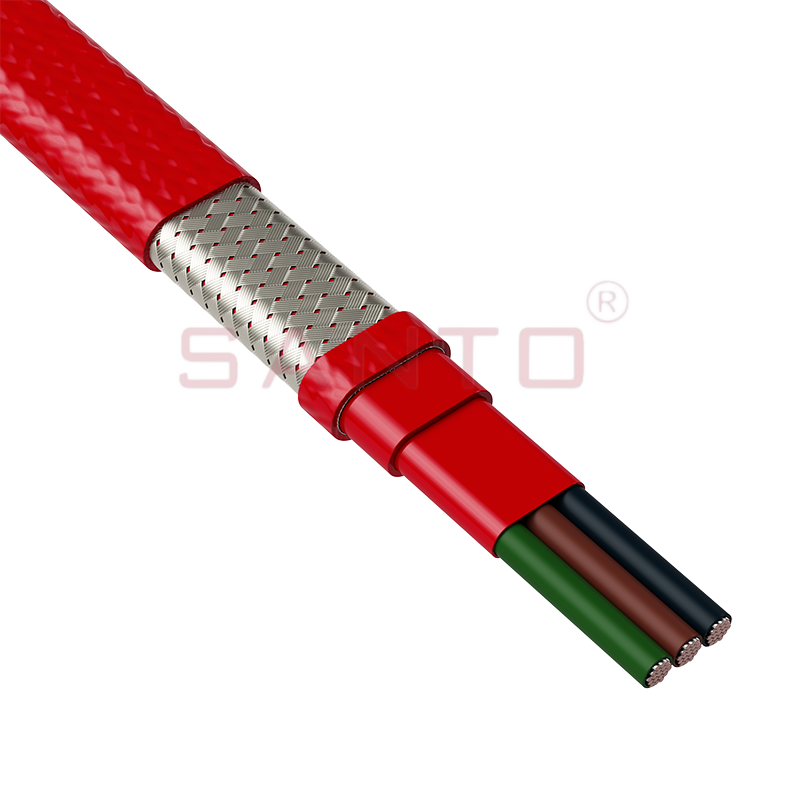
The stranded high temperature conductor is nickel plated to ensure a long life at elevated temperatures in corrosive environments. It is electrically isolated using an innovative sandwich construction...
See Details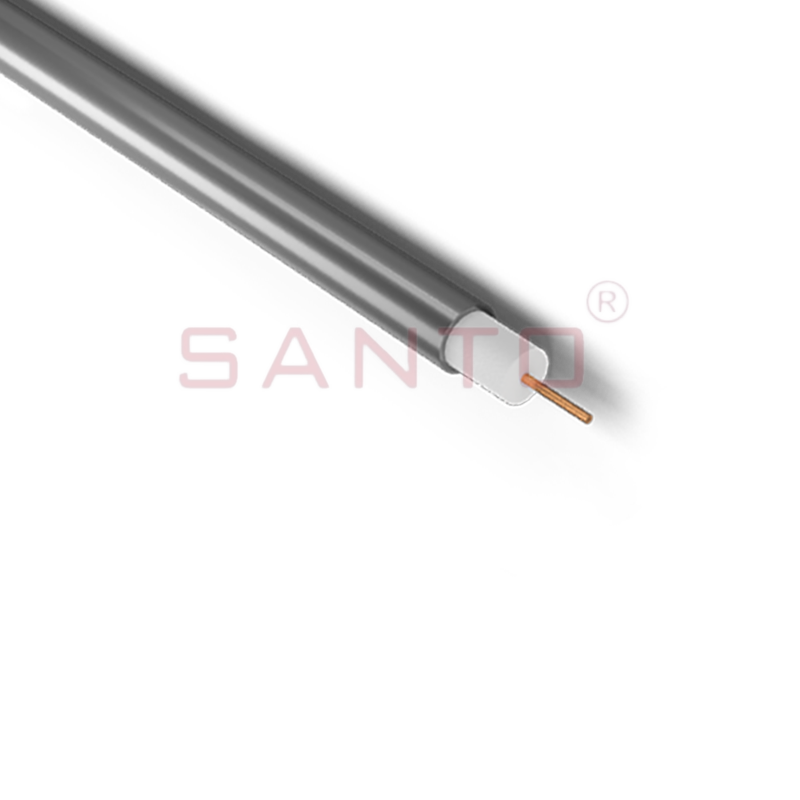
SANTO HAx mineral insulated (MI) Alloy 825 series heating cables are suitable for use in hazardous areas. They have been designed for use in freeze protection and temperature maintenance applications ...
See Details
Santo electric heating strips are widely used in key industries in China.

