English
  English
 русский
 日本語
日本語 Español
 中文简体
中文简体
The pipe run on site is 13.7 m, and the spool of heat tracing cable holds 50 m. The practical question is simple: can self-regulating heating cable be cut to length? The answer is yes — a self-regulating heating cable is designed to be cut and terminated in the field, and cutting it does not change the power output per metre of the cable that remains. The reason is construction: the cable is a parallel circuit whose PTC (positive temperature coefficient) core works segment by segment. Three conditions still apply. The cable must be a self-regulating parallel type, the finished circuit must stay within the model's rated maximum length, and both ends need approved termination components.
Content
- Why a Self-Regulating Heating Cable Can Be Cut to Length
- What Limits Still Apply When You Cut to Length
- How to Cut and Terminate a Self-Regulating Cable
- What Field Cutting Changes and What It Does Not
- Choosing a Self-Regulating Cable That Is Safe to Cut
- Frequently Asked Questions About Cutting Self-Regulating Cable
Why a Self-Regulating Heating Cable Can Be Cut to Length
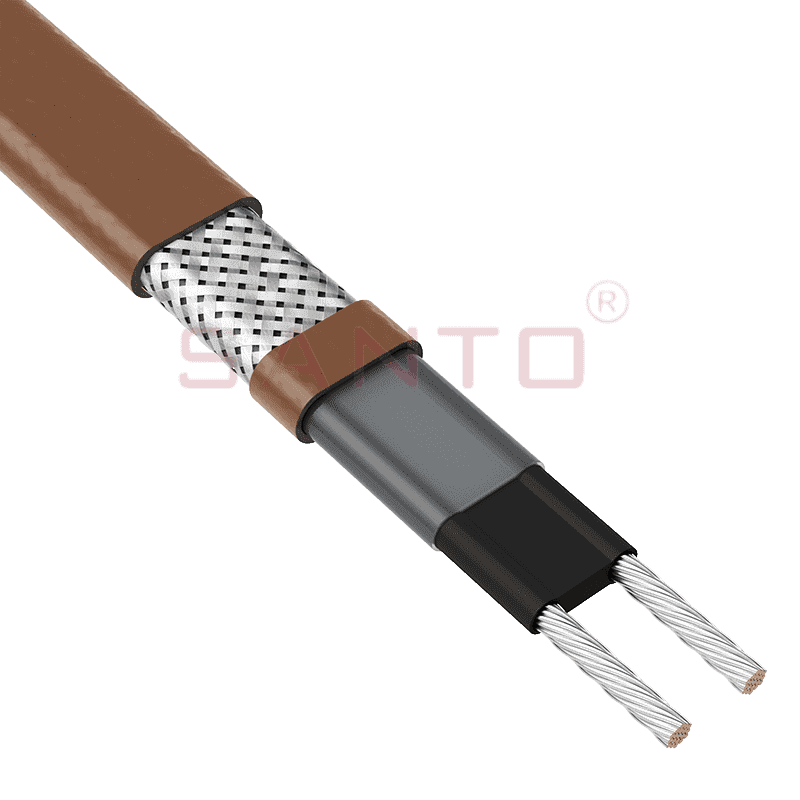
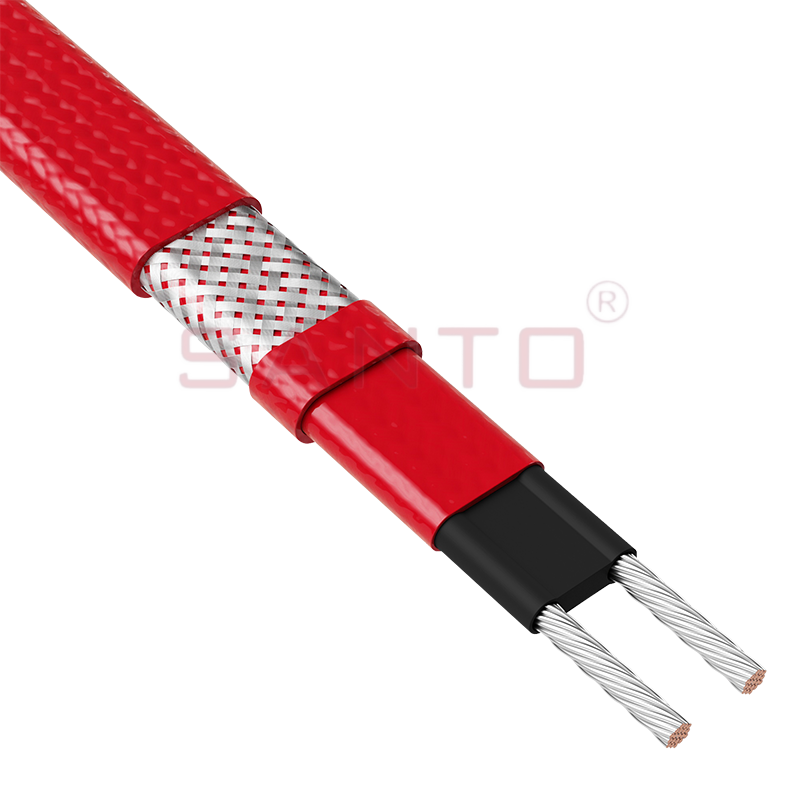
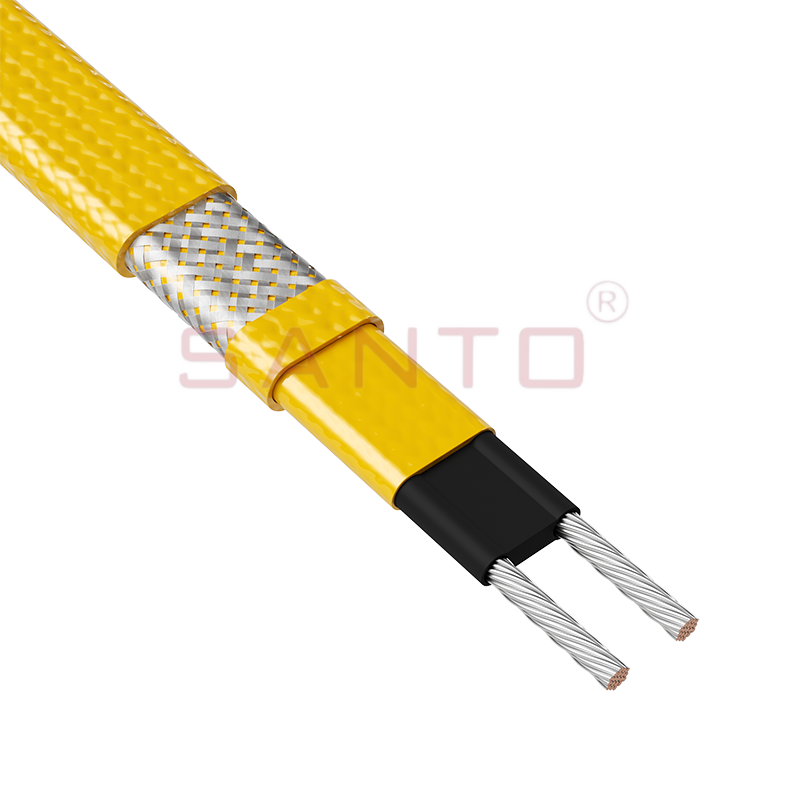
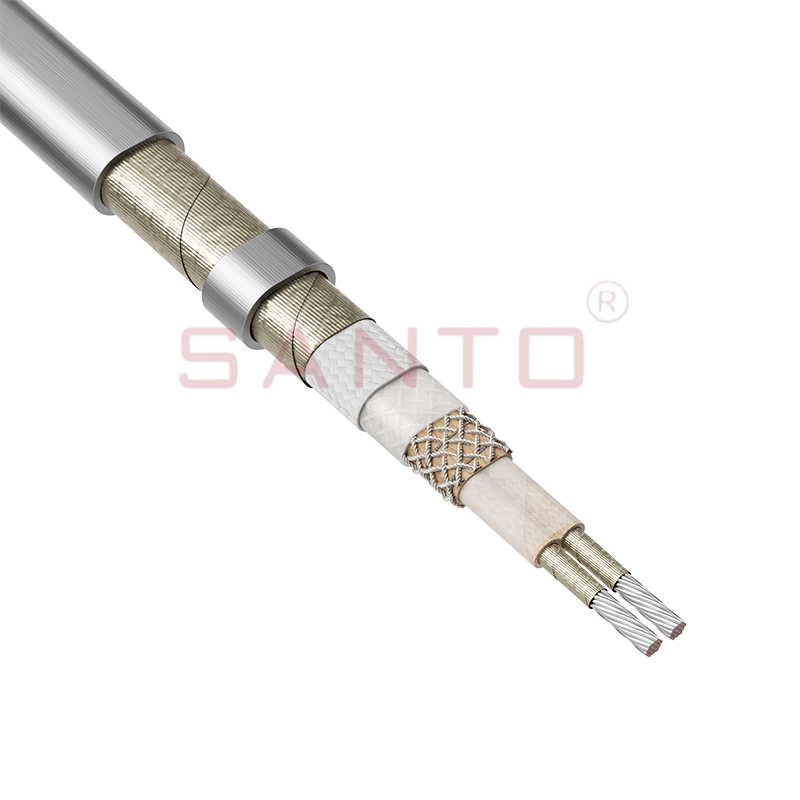
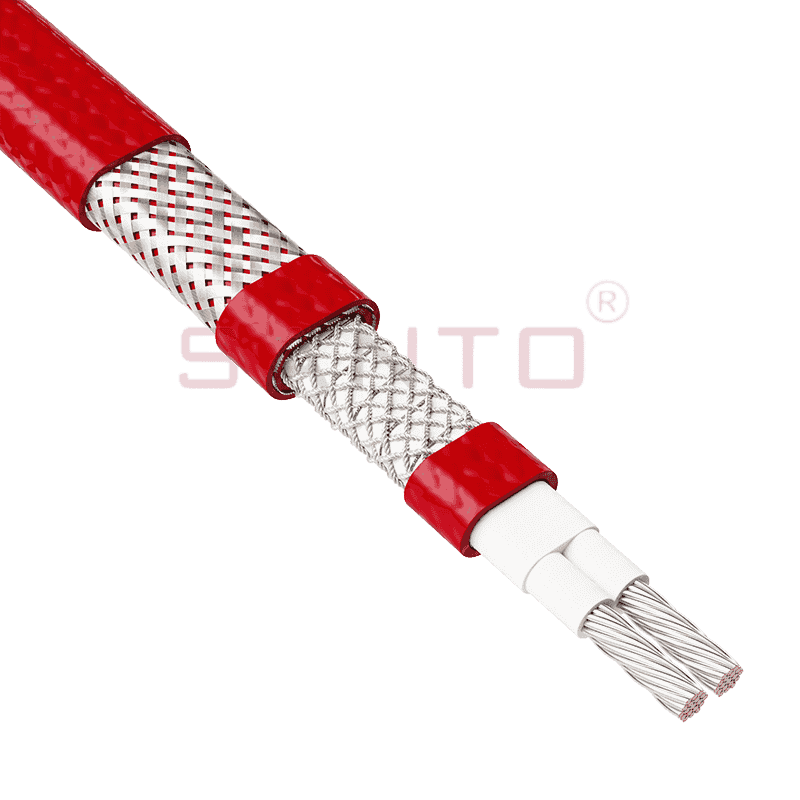
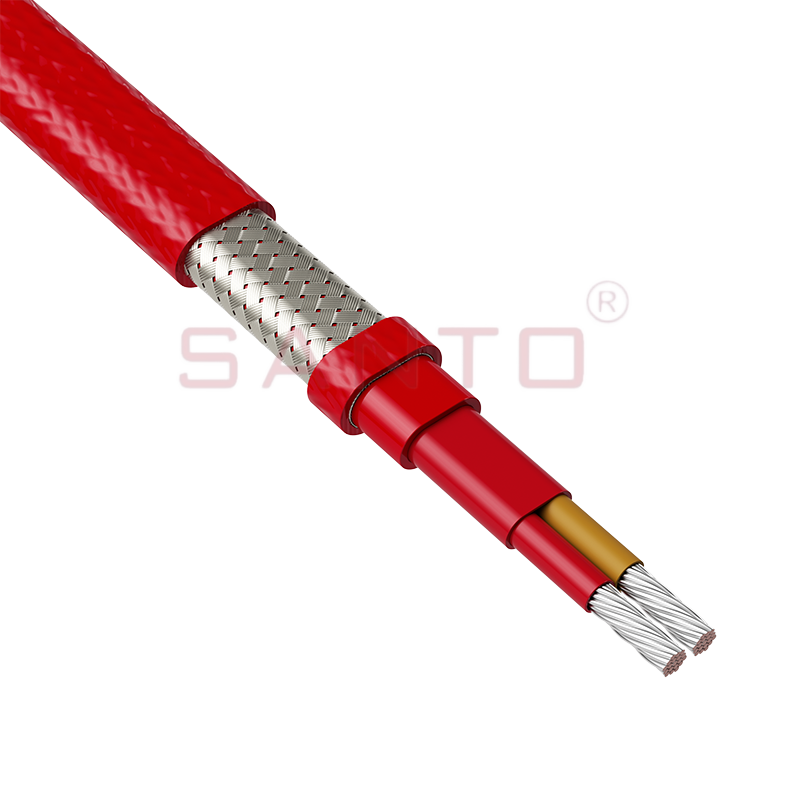
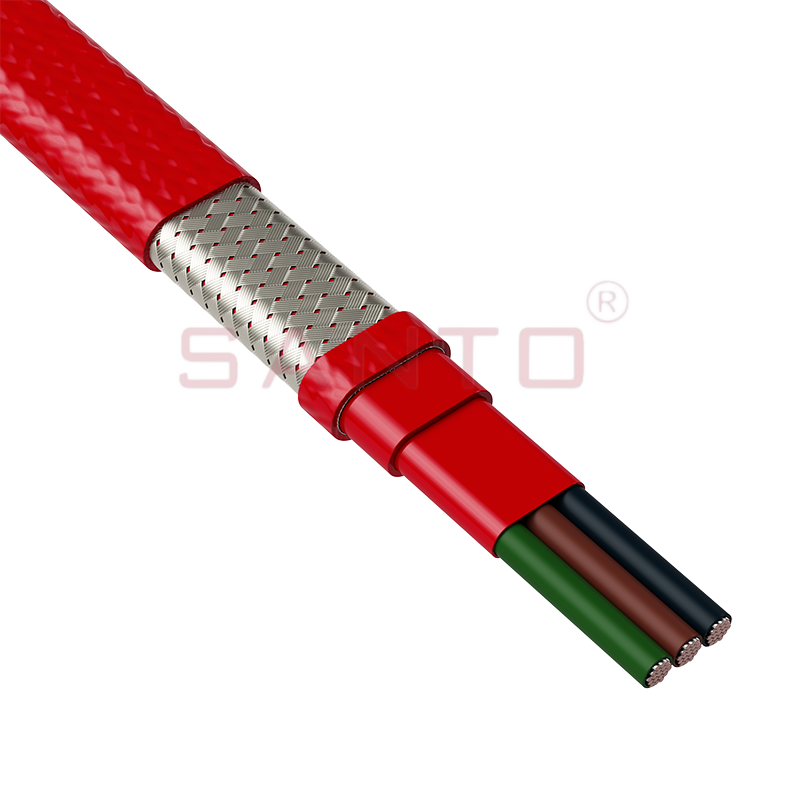
The reason cutting works is the parallel, PTC construction. Two copper bus wires run the full length of the cable, and a carbon-loaded conductive polymer between them acts as the heating element. As the polymer warms, its resistance rises, so every segment of the cable automatically trims its own heat output. When you cut through the cable, you simply remove one parallel segment. The segments on either side still see the full supply voltage and keep working at the same output per metre as before. If the working principle is new to you, this overview of self-regulating heating cables explains the physics in plain language.
That is the crucial difference from series-wound constant wattage cable. A series cable depends on one continuous heating alloy wire; cutting it opens the circuit and the whole cable goes cold. Mineral insulated (MI) heating cables are likewise a series construction and are normally terminated at the factory rather than in the field. The table below summarises the practical comparison.
| Feature | Self-regulating | Constant wattage (series) |
|---|---|---|
| Cut to length on site | Yes | No |
| Power output per metre after cutting | Unchanged | Cable stops heating |
| Temperature response | Automatic, segment by segment | Fixed output |
| Overlap during installation | Safe — output drops locally | Overheating risk |
| Typical applications | Pipe freeze protection, roof snow melting, floor heating | Long process lines, high-temperature maintenance |
None of this means one type is always superior. Constant wattage cable is the right tool for long industrial lines that need stable high output at elevated temperatures. But when the job involves field fitting around pipes, valves, flanges and awkward corners, the cuttable self-regulating cable is the easier and safer option.
What Limits Still Apply When You Cut to Length
Cutting is allowed, but not without a limit: the finished circuit must stay within the rated maximum length for that model and supply voltage. Every heating circuit runs through one protective breaker, and self-regulating cable draws an inrush current several times higher than its running current during cold startup. Exceeding the rated length pushes the total inrush past the breaker curve, and the circuit trips on the coldest morning of the year.
Most cuttable self-regulating cables have a single-circuit maximum between roughly 40 m and 100 m, depending on voltage, model and startup temperature. The exact number is printed in the product specification sheet, so check it before connecting several cut pieces to the same breaker.
Manufacturers generally do not state a minimum cut length for a working circuit, but practical judgement still matters. A piece shorter than about one metre is difficult to terminate cleanly, delivers negligible heat and creates an awkward connection point. For short runs, a factory cold-lead assembly is a much better solution than a scrap offcut with a spliced supply lead.
- Keep every complete circuit within the maximum length stated in the datasheet.
- Use one circuit breaker per heating circuit and size it from the datasheet, not from habit.
- Treat any piece shorter than about one metre as impractical; use a factory cold-lead assembly instead.
- Record the installed circuit length on the panel label for future maintenance.
How to Cut and Terminate a Self-Regulating Cable
The operation is simple in principle, but termination quality decides whether the circuit survives a full winter.
- Disconnect the power and confirm the cable is de-energized with a voltage tester.
- Measure the pipe run, and add allowance for routing around valves, flanges and supports plus the distance back to the junction box.
- Cut through the jacket and core cleanly at 90 degrees with a sharp utility knife or cable cutter.
- Strip the outer jacket and foil or braid shield carefully. Do not nick the two copper bus wires; a small cut here becomes a hot spot or an open circuit later.
- Trim the conductive polymer core between the bus wires to suit the connection kit.
- Install the approved cold-lead connection kit at the supply end and the end seal at the cut end, following the kit's instructions in order.
- Run an insulation resistance test with a megger before energizing. A low reading means the end seal is not sealed.
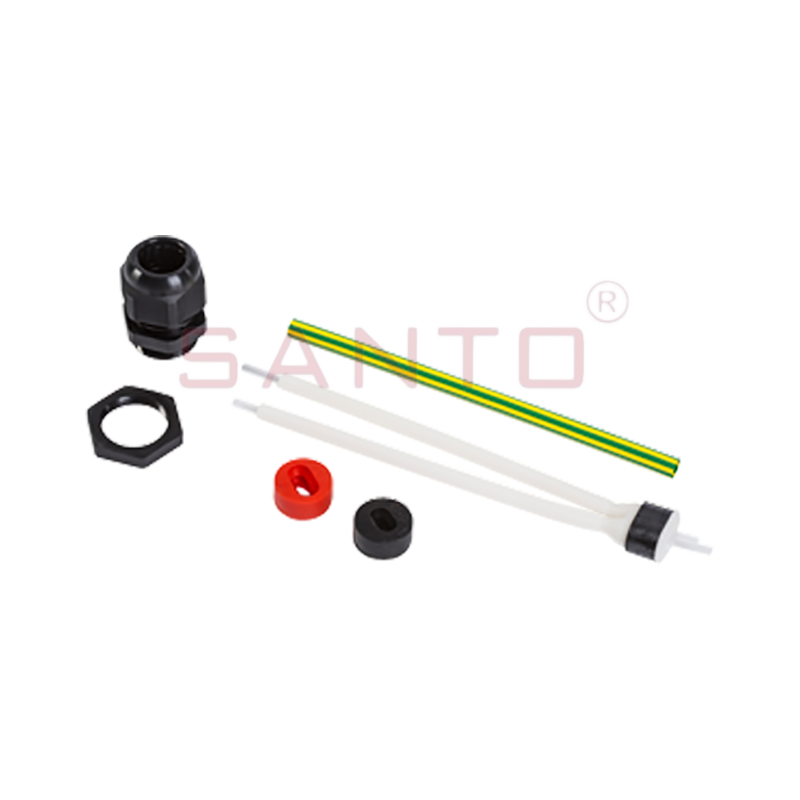 SANTO U-25-100 Cold Installation Connection Kit for Self-Regulating CablesThis termination kit includes crimp connectors, sealing sleeves, and heat-shrink parts sized for self-regulating heating cables, ensuring a moisture-resistant end seal that prevents braid tracking and circuit failure.View Product →
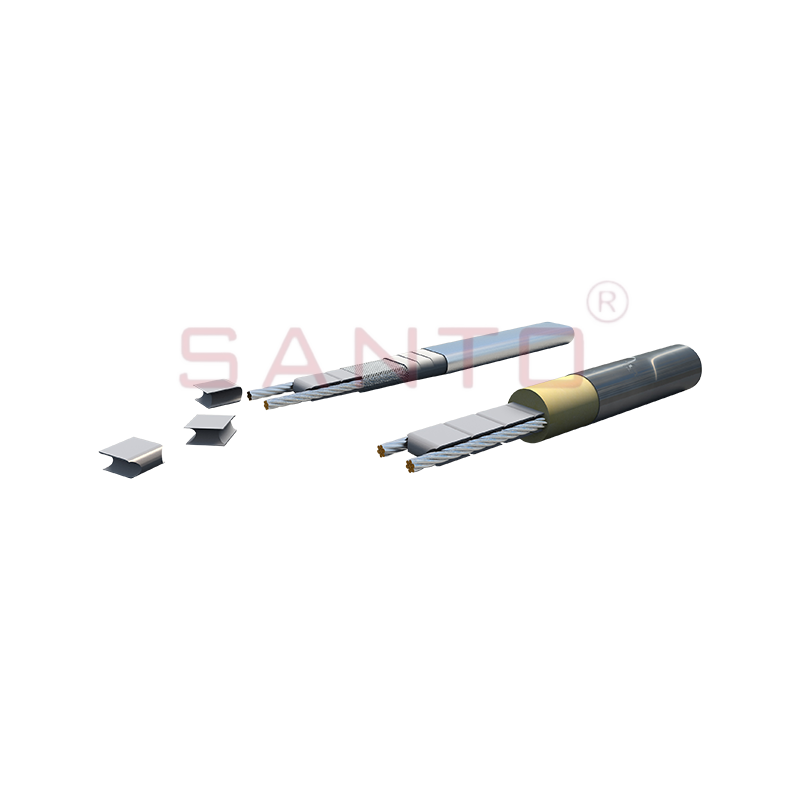
Do not economise on the end seal. A cut end finished with generic tape and heat-shrink tubing will fail within months as moisture tracks along the braid. Use the approved kit that matches your cable family, and fit it exactly in the sequence given in the instructions. The SANTO U-25-100 cold installation connection kit is a typical example: it contains the crimp connectors, sealing sleeves and heat-shrink parts sized for self-regulating heating cables.
If two cut pieces must be joined along the run, use a rated splice kit designed for self-regulating cable. Do not twist bus wires together and wrap them with tape; that connection fails from oxidation and moisture within months.
What Field Cutting Changes and What It Does Not
Cutting to length changes the circuit's total current draw, not its unit performance. Because every parallel segment sees the full supply voltage, the watts-per-metre rating at any given temperature stays the same after the cut. The PTC effect also remains intact: a section of pipe warmed by the sun will throttle its own output while a shaded section keeps producing heat.
Total inrush current is proportional to installed length, so a short field-cut circuit actually starts more gently than a full spool would. That is a practical advantage when several short circuits share one distribution board. It also means an oversized circuit near the maximum limit will draw a higher cold-start current, so breaker sizing should follow the datasheet rather than habit.
After a clean cut and approved termination, the installer should see the same power per metre, full self-regulating behaviour on both sides of the cut, and no exposed braid at the end seal.
Choosing a Self-Regulating Cable That Is Safe to Cut
Check the specification sheet before buying, not after: the cable must be explicitly listed as cuttable to length, and the datasheet must state maximum circuit lengths at your supply voltage.
| Factor | Key question to ask the datasheet |
|---|---|
| Supply voltage | Is the cable rated for 110 V or 230 V? |
| Power output at 10 °C | Does the W/m rating cover the calculated heat loss? |
| Maximum maintain temperature | Can it hold the process temperature without self-limiting too early? |
| Maximum exposure temperature | Will steam cleaning or solar gain exceed the limit? |
| Hazardous area rating | Is the cable certified for the zone classification? |
For general pipe freeze protection and tank insulation, a medium-output cable in the SANTO UFA family covers most industrial and commercial runs. Where a higher maintain temperature or a more aggressive chemical environment is involved, the SANTO UFO series shifts the balance toward higher-temperature capability.
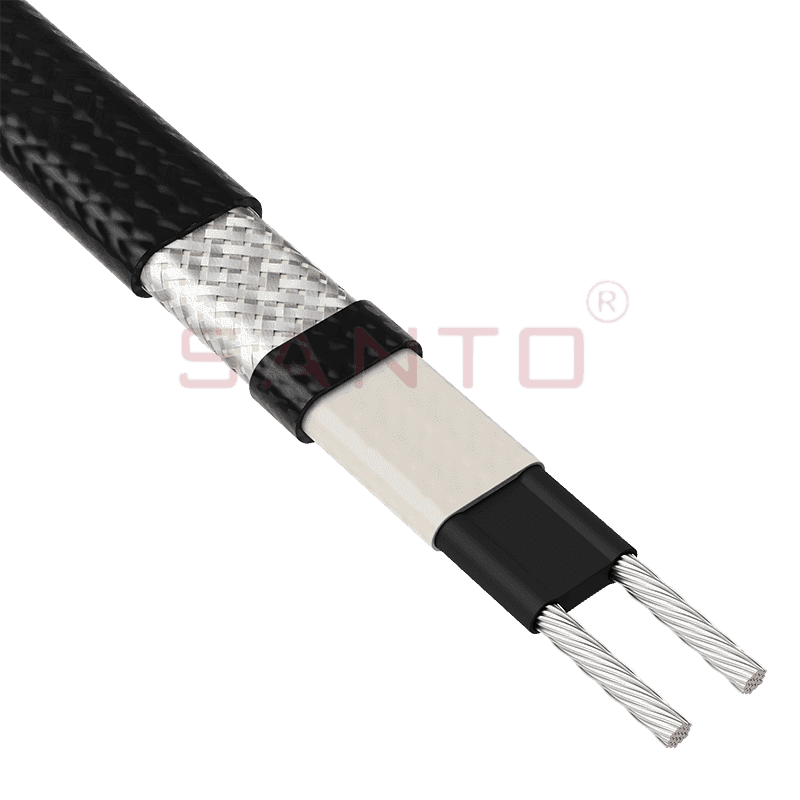 SANTO UFA Self-Regulating Heat Tracing Cables for Frost ProtectionAvailable with polyolefin or fluoropolymer jackets, the UFA range maintains process temperatures up to 65°C and carries hazardous-area approvals, making it a reliable choice for general pipe and vessel freeze protection.View Product →
The full self-regulating heat tracing cable range adds the UFB and UFC series alongside UFA and UFO, so you can match the jacket material, exposure limits and power output to the pipe material and process conditions.
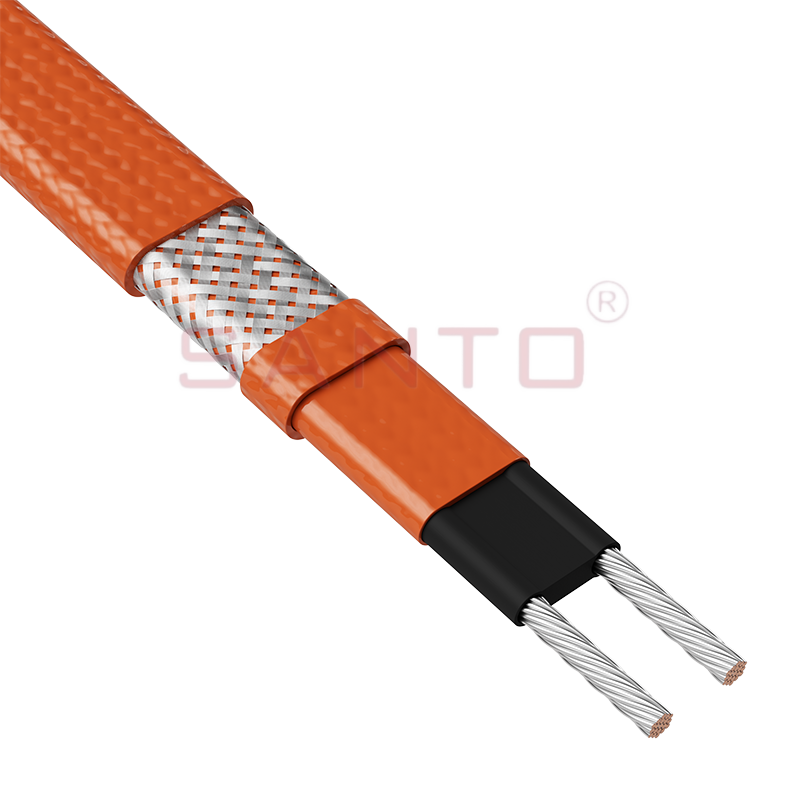 SANTO UFO Self-Regulating Heat Tracing Cables for High-Temperature ProcessesWith fluoropolymer jackets and the ability to maintain processes up to 150°C, the UFO series suits steam-cleaned pipes and vessels, offering high chemical resistance and hazardous-area approvals for demanding environments.View Product →
Whichever model you choose, keep the specification sheet with the installation file. The rated maximum length, breaker size and termination kit part numbers will all be needed again during commissioning and maintenance.
Frequently Asked Questions About Cutting Self-Regulating Cable
Can I cut self-regulating heating cable with a regular utility knife?
Yes. A sharp utility knife is the standard field tool. Make one perpendicular cut through the jacket and core, then strip the jacket back for termination. Avoid saws, which can drag the braid and leave loose strands that lead to short circuits.
What happens if I cut a constant wattage heating cable?
A standard series constant wattage cable stops heating, because the single heating alloy wire is broken. Some zone-type constant wattage cable can be cut at defined points, but as a field rule: self-regulating cable is designed for cutting, constant wattage cable is not. Check the manufacturer's statement, not the marketing text.
Can I join two field-cut pieces together?
You can, when both pieces are the same cable type and the combined circuit stays below the rated maximum. Use a splice and seal kit approved for that cable family. Every field splice is a potential moisture entry point, so keep splices to a minimum on outdoor or buried runs.
Does field cutting void the certification?
Not when you follow the manufacturer's termination instructions and use approved end seal and connection kits. A field-cut end finished with generic tape and heat-shrink is not a valid termination; it can void the approval and fail in wet service.
The installer's rule for self-regulating cable is simple: measure twice, cut once, terminate both ends with the approved components, and stay within the rated circuit length. A self-regulating heating cable is cuttable by design, and the design keeps working as long as the circuit respects the datasheet. When those conditions are met, the system adjusts its own output over every metre of pipe for years without an engineer in the loop.